















Stay on UGC anti-discrimination regulations succumb to flawed forward caste narratives: Fraternity Movement
text_fields

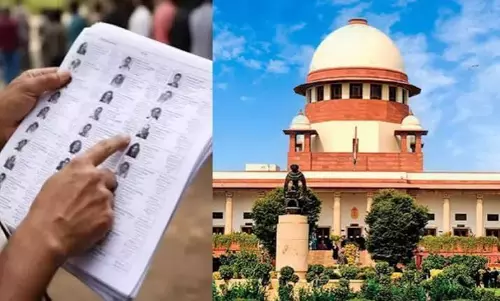
Kozhikode: The Supreme Court’s decision to stay the Promotion of Equity in Higher Education Institutions Regulations, 2026 issued by the UGC, meant to curb caste discrimination in higher education, would amount to succumbing to the pressures by upper caste sections, said Fraternity Movement State President Naeem Gafoor.
The organisation’s reaction came in response to the apex court’s directive to the UGC to issue a revised framework of the 2012 Equity Regulations following petitions filed by the mothers of Rohith Vemula and Payal Tadvi, both victims of institutional killings resulting from caste discrimination.
Although various Dalit–Adivasi social activists and thinkers had raised criticisms pointing out shortcomings in the revised framework, the present stay by the court is a consequence of protests by forward caste organisations alleging that the regulations portray upper caste communities as culpable.
The very core of the counter-petitions filed by Banaras Hindu University post-doctoral researcher Mrityunjay Tiwari, Vineet Jindal, and Rahul Dewan reflects this upper caste mindset. Arguments advanced even by legal experts that laws against caste discrimination themselves create divisions in society stem from a deeply entrenched forward caste mindset blocking the empowerment of the lower and educationally backward classes.
While court actions that appear to accommodate forward caste narrative must be viewed with suspicion, the criticisms coming from communities that are currently subject to racial and caste discrimination regarding the regulations issued by the UGC also need to be addressed.
In the face of casteism and Islamophobia, what is needed is that the UGC framework must be revised by formulating clear definitions of racial discrimination and by bringing all educational institutions in the country within its purview, the organisation said.
Society must challenge and defeat the dominant upper class argument that seeks to dismiss racial discrimination as mere fiction. Marking ten years since the institutional killing of Rohith Vemula, this moment must be used to intensify social and political struggles for comprehensive legislation in the form of a Rohith Act, Naeeem Gafoor added.