









Were all decisions unanimous, as the EC claimed before the Supreme Court?
text_fields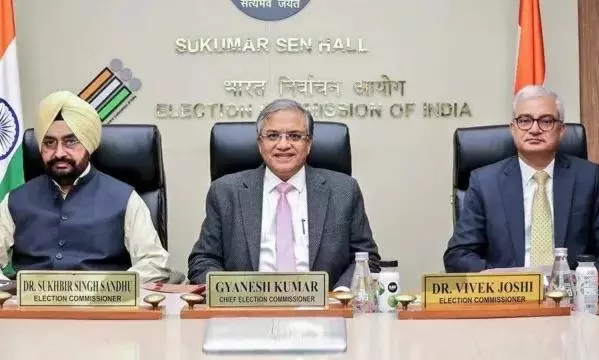

The Election Commission of India’s submission before the Supreme Court, responding to allegations of unilateral decision-making by Chief Election Commissioner Gyanesh Kumar, maintains that all major decisions concerning the Special Intensive Revision (SIR) of electoral rolls were taken unanimously.
However, records reveal that differences were strategically set aside, while decisions were implemented without two of the three Commissioners being adequately informed or consulted, thereby creating an appearance of collective agreement.
In its affidavit, approved unanimously by all three members, the Commission argues that individual notes recording objections, suggestions or queries formed part of its consultative process and did not constitute formal decisions.
The Indian Express reported that most of the 14 notes recorded over ten months by Election Commissioners Sukhbir Singh Sandhu and Vivek Joshi were written after decisions had already been taken, orders issued or administrative mechanisms established.
The dispute over Form 6, the statutory application for inclusion in electoral rolls, illustrates the problem. In May, Joshi recorded that the form could not be altered without amending the Registration of Electors Rules, 1960, a position endorsed by Sandhu; nevertheless, a declaration was subsequently incorporated into its online version in July, prompting Sandhu to describe the change as “unauthorised/illegal” after learning of it through the media.
The Commission now contends that the declaration was a separate document rather than an amendment to Form 6, while acknowledging that its online presentation could have created the impression that the statutory form had been altered. Following the controversy, the Commission’s Electoral Rolls Division decided on October 21 to separate the declaration from Form 6 in the online application process; however, the affidavit does not identify who authorised its original incorporation.
Similar questions surround ECINet, the Commission’s electoral-roll software platform. Joshi had warned in May against the gradual centralisation of the electoral-roll database and proposed an independent expert committee to ensure that only authorised statutory officials could modify records.
Sandhu subsequently endorsed the proposal, although his August note recorded that the fate of their recommendations remained unknown. The Commission now presents the establishment of a review committee, including experts from IIT Mumbai and IISc Bengaluru, as a decision taken in September, without acknowledging the earlier objections.
The Goa episode raises further concerns, as the software reportedly prevented electoral registration officers from implementing decisions reversing deletions, despite repeated requests from the state’s election authorities. Although the affidavit notes that 88 of the 97 affected voters have since reapplied, it does not explain why the system initially obstructed the process.
In West Bengal, the Commission maintains that appeals against orders restoring voters to electoral rolls were filed by officers of the state Chief Electoral Officer’s office under authority granted by the Supreme Court. However, Sandhu’s contemporaneous notes indicate that the Chief Electoral Officer herself had said she lacked information about the appeals.
The affidavit thus establishes the Commission’s formal position, but leaves unanswered the central question: whether unanimity in recorded decisions reflected genuine collective deliberation or merely concealed a process in which crucial decisions preceded consultation.