


















Union Budget 2026: What gets cheaper and costlier in FY27
text_fields

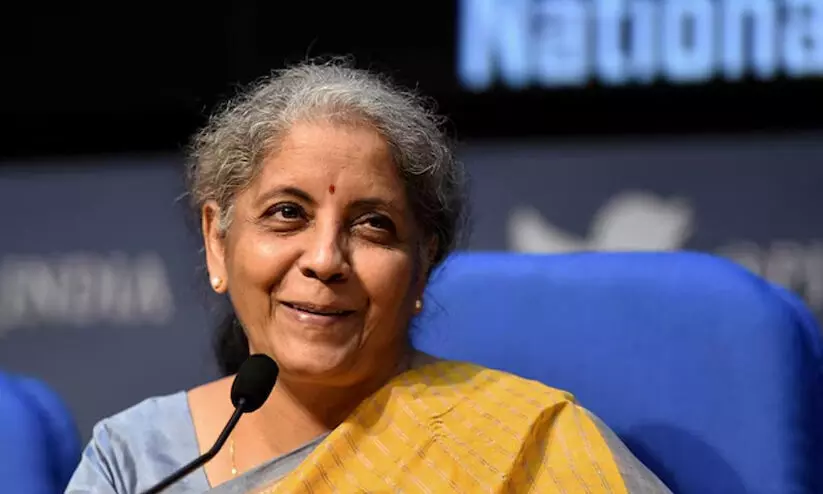
New Delhi: Union Finance Minister Nirmala Sitharaman on Sunday announced several changes in taxes and duties in the Union Budget 2026–27, making select goods and services cheaper while raising costs in certain areas.
Outward remittances are set to become cheaper as the Budget reduces Tax Collected at Source on overseas tour packages and on education and medical remittances under the Liberalised Remittance Scheme to 2 per cent. Earlier, overseas tour packages attracted TCS of 5-20 per cent, while education and medical remittances were subject to a 5 per cent levy.
The Budget also cuts or removes basic customs duties and transaction charges on a range of items, including energy transition equipment, solar glass inputs, capital goods required for critical minerals and lithium-ion cells, civilian aircraft maintenance, repair and overhaul components, rare and cancer drugs, and select textile and leather inputs.
Fish caught by Indian fishermen and goods used for nuclear power have been exempted from basic customs duty. The duty on microwave ovens and personal-use imports has been reduced to 10 per cent from 20 per cent.
Import duties have also been lowered on graphite, quartz, coal, sand, silicon, rare-earth metals and metal oxides. In addition, the export realisation period for certain textile and leather shipments has been extended to one year.
The basic customs duty on makhana and roasted nuts has been slashed to 30 per cent from 150 per cent, while duties on almonds and walnuts have been reduced. The duty on seeds and spores used for sowing has been halved to 15 per cent from 30 per cent, and wet blue leather will now attract zero import duty.
In the petroleum sector, the 5 per cent ad valorem duty on crude oil has been replaced with a flat levy of Rs 1 per tonne.
On the costlier side, penalties for income tax misreporting have been increased to 100 per cent of the tax amount, in addition to tax and interest. Trading in futures and options will become more expensive, with the securities transaction tax on stock options raised to 0.15 per cent and the levy on futures increased to 0.05 per cent from 0.02 per cent.
Tax collection at source rates have been raised from 1 per cent to 2 per cent on the sale of alcoholic liquor, minerals and scrap. Chewing tobacco products, including zarda and gutkha, will attract a higher National Calamity Contingent Duty, increased to 60 per cent from 25 per cent.
Presenting the Budget, the Finance Minister said it rests on three pillars, faster growth, inclusive development and structural reform, and reaffirmed that its broader focus remains on the poor and disadvantaged.

With IANS inputs