

















TN govt’s fact check shows Dargah not built on demolished temple grounds
text_fields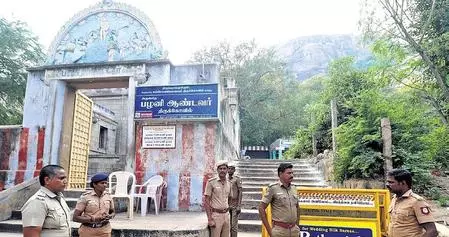

Tamil Nadu: On December 8, the Tamil Nadu government debunked a circulating misinformation that claimed a dargah was being constructed on temple land at Thiruparankundram Hill, describing it as a rumour intended to incite hatred.
Tamil Nadu, which has been actively countering the spread of communal disinformation, issued an official clarification through its fact-checking department. The team stated that the message alleging that a Madurai Goripalayam dargah was built after demolishing a temple was entirely fabricated.
The false claim spread widely after right-wing groups circulated images of the dargah, suggesting it resembled temple structures. Officials pointed out that the visuals in question were actually of the Sikandhar Dargah, a centuries-old Islamic shrine built in the 14th century, which incorporates Dravidian architectural features inspired by the Pandya style.
Referring to the book Islamic Architecture, published by the Government of Tamil Nadu’s Department of Museums, the fact-checking team explained that historical Islamic structures in Tamil Nadu often adopted local Dravidian motifs—such as cornices and pillars—making them look similar to temples. Officials clarified that this reflected shared craftsmanship across religious communities, not temple demolition or conversion.
The team also cited historical accounts, noting that the book explains how Islamic places of worship in the region were frequently designed with Dravidian elements. In a message posted on X, the department urged the public not to fall for rumours or spread communal hostility, Siasat Daily reported.
“The book explains with evidence that many similar Islamic places of worship in Tamil Nadu, like temples, are built based on Dravidian architecture. Do not spread religious hatred! Do not believe the rumours!” the X post read.
“Because of the continuous civil wars among the members of the ruling family, the Sultans who ruled Madurai could not bring much either in Islamic religion ot art. However, according to Ibn Batuta, the newcomers, the Sultans, from the north, adopted the local customs of the region. He also says that there was no destruction of temples and breakage of idols,” the source read.
According to the text, Sultan Alauddin was buried in Goripalayam near the Vaigai River, and his mausoleum—constructed in the mid-14th century—mirrors Pandya-era temple design in many aspects. While its architectural style resembles that of a temple, the presence of the dome marks it as an Islamic structure.
The book notes that the mausoleum’s exterior walls feature classic Pandya-style ornamentation. The shrine, built on an elevated platform with steps leading to the graves, also includes three niches (kostas) that were originally sealed but have since been opened for visitors to view the grave from outside.