






Supreme Court to examine whether facial recognition at Delhi protests violates privacy
text_fields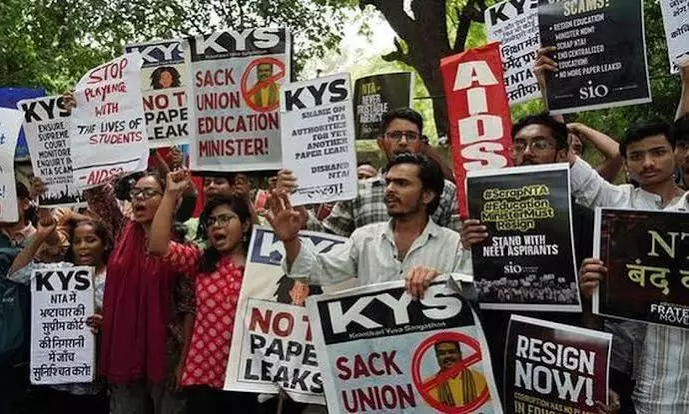

The Supreme Court on Tuesday agreed to examine whether Delhi Police's use of surveillance, including facial recognition technology, during protests at Jantar Mantar in July amounted to “negative State interference”.
A three-judge bench led by Chief Justice Surya Kant issued notice on a petition seeking details of the surveillance methods used, the legal framework governing them, and safeguards for the data collected.
Advocate Prashant Bhushan, appearing for the petitioners, raised concerns over the use of facial recognition technology. Justice Joymalya Bagchi said the court would examine whether replacing human interpretation with powerful machines capable of identifying large numbers of citizens infringed on privacy.
The judge also asked the government to address the legal provisions permitting iris scans under the Criminal Procedure (Identification) Act, 2022.
Solicitor General Tushar Mehta argued that CCTV cameras were installed at designated protest sites for security purposes. He said facial recognition matches did not automatically lead to action, as individuals were physically verified before any decision was taken.
Justice Bagchi said the court would examine whether using police footage alongside National Crime Records Bureau data amounted to “negative State interference”.
The hearing also addressed complaints from Delhi traders about business losses caused by protests and restrictions. Senior Advocate Mukul Rohatgi, representing traders, sought a two-month ban on protests and dharnas, arguing that businesses had suffered heavy losses during the festive season.
The petitioners opposed the demand, arguing that the State had imposed barricades and forced shops to close. Senior Advocate Menaka Guruswamy also questioned the detention of around 7,000 people during an October 10 protest.
Chief Justice Surya Kant said the right to protest and the right to trade and earn a livelihood were competing constitutional interests. He suggested identifying protest sites that would not disrupt daily business.
The Chief Justice also said designated protest sites could not be occupied indefinitely and that permissions should be granted for specific periods. The court asked Rohatgi to include the organisations that conducted the protests as parties to his petition.