















Supreme Court questions motive behind Sabarimala PIL, criticises ‘publicity interest’
text_fields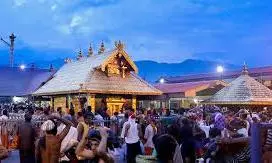

The Supreme Court on Tuesday sharply questioned the motive behind the public interest litigation that led to the Sabarimala women's entry case.
Justice B V Nagarathna said that PILs had increasingly become “private interest litigation, publicity interest litigation, paisa interest litigation, and political interest litigation.”
Hearing the Sabarimala reference matter for the eleventh day, the nine-judge Constitution Bench repeatedly questioned advocate Gupta, appearing for the Young Lawyers Association, on the purpose of filing the original petition challenging the restriction on the entry of women of menstruating age into the hill shrine.
“Now, we want to know why you filed this PIL at all? What was it that you wanted to achieve?” Justice Nagarathna asked during the hearing.
The bench also criticised the use of media reports as the basis for PILs.
Chief Justice of India Surya Kant observed that petitions founded on such material “should have been thrown out rightly in the dustbin,” while Justice Nagarathna cautioned that it was “easy to get articles written for the sake of filing a PIL.”
The court further questioned whether the Young Lawyers Association should instead focus on welfare activities for the legal fraternity. “Work for the bar, work for younger members, work for their welfare,” Justice Nagarathna said, referring to young lawyers from rural backgrounds struggling to establish themselves in cities.
During the proceedings, the bench engaged extensively with questions of faith, belief, and religious practice. Justice Nagarathna observed that a devotee who truly believed in a deity would ordinarily follow the prescribed customs and rituals associated with worship.
“If any such devotee is saying, ‘I will break all niyams, and then I will enter’, such a person cannot be encouraged by this court,” she said.
The bench also pulled up the counsel on several occasions over his submissions on religion and temple practices. At one point, the Chief Justice remarked that the counsel’s interpretation of Sanskrit verses from the Bhagavad Gita was “completely misleading.” In another exchange, the bench criticised references made to Khajuraho and Odisha temples, saying the counsel lacked adequate knowledge of the subjects he was discussing.
Advocate Gupta argued that the 2018 Sabarimala judgment, which struck down Rule 3(b) of the Kerala Hindu Places of Public Worship Rules, had attained finality and could not be reopened through the present reference proceedings.
Later in the day, senior advocate Darius Khambata commenced submissions on behalf of a Parsi woman married to a Hindu man. Khambata told the court that resolving the issues involved required “a collaborative effort rather than a confrontation.”
The hearing resumed before a nine-judge bench led by the Chief Justice and including Justices B V Nagarathna, M M Sundresh, Ahsanuddin Amanullah, Aravind Kumar, Augustine George Masih, Prasanna B Varale, R Mahadevan, and Joymalya Bagchi.