
















Student moves Delhi HC after Jamia denies PhD admission despite selection
text_fields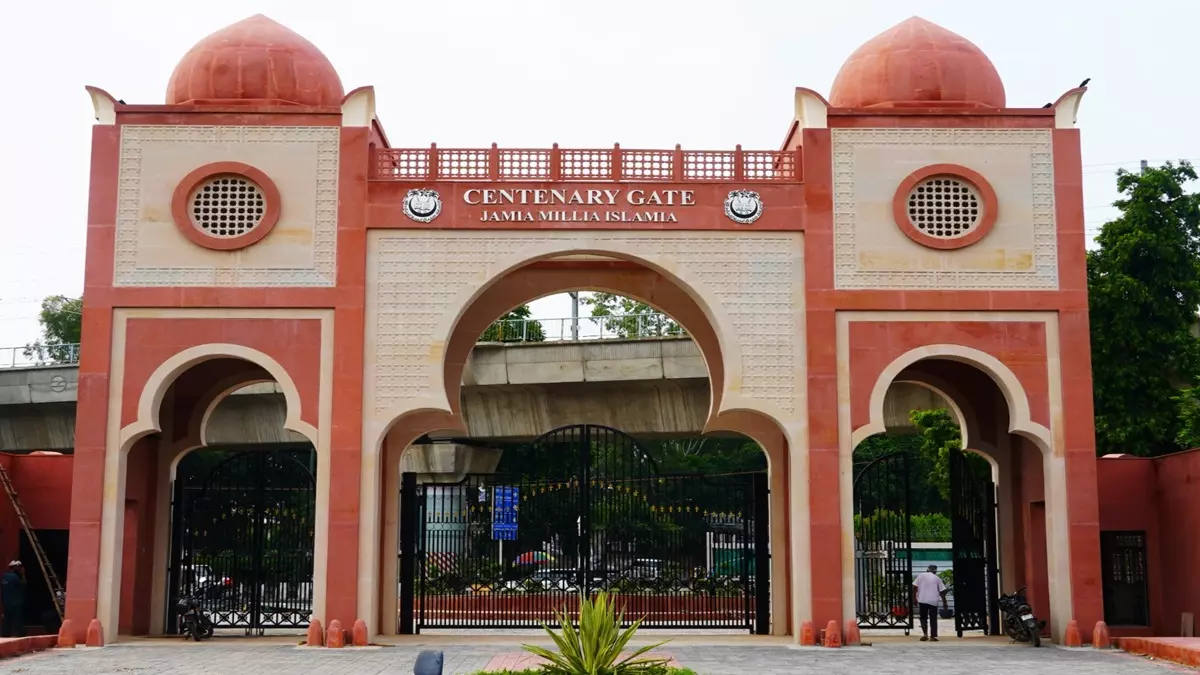

New Delhi: A student has approached the Delhi High Court alleging that Jamia Millia Islamia (JMI) arbitrarily denied him admission despite being selected through its official admission process for the 2025–26 academic session.
The petitioner, Salman Saleem, has filed a writ petition under Article 226 of the Constitution, challenging JMI’s refusal to grant him admission to the PhD programme at the Anwar Jamal Kidwai–Mass Communication Research Centre (AJK-MCRC) under the UGC-NET exempted category.
According to the petition, Saleem qualified for UGC-NET (June 2024) and applied for the PhD programme following JMI’s admission notification dated October 16, 2025. He was issued an admit card, appeared for the interview, had his documents verified at multiple stages, and was subsequently declared selected in the final admission list published on December 19, 2025.
However, when Saleem reported to complete admission formalities between December 23 and 30, he was allegedly orally informed that he would not be granted admission, with university officials citing the purported expiry of his UGC-NET qualification. The petitioner claims that no written order or formal communication explaining the rejection was ever issued.
The petition contends that neither JMI’s PhD Ordinance nor UGC regulations prescribe a cut-off date requiring the NET qualification to remain valid on the date of admission, and that Saleem’s eligibility had already been verified at the time the admission notification was issued. It further argues that the university’s delay in completing the admission process cannot be used to penalise a candidate who was otherwise eligible and formally selected.

Advocate Syed Kaif Hasan, representing Saleem, told Maktoob, “The present writ petition arises out of an arbitrary, belated and legally unsustainable denial of admission to the petitioner to the PhD programme.”
Highlighting institutional inaction, Hasan added, “The petitioner’s representations seeking review of eligibility and admission have not been decided till date, resulting in denial of admission by inaction, which is as illegal and arbitrary as an express adverse decision.”
He also noted that Saleem’s research proposal had been duly accepted, a supervisor assigned, and the academic relationship with the institution had already crystallised.
The petition further alleged violations of reservation norms, stating that seats were not disclosed or allocated category-wise as mandated under JMI’s Ordinance 6 (VI), undermining transparency in the admission process. On this, Hasan said, “The institutions have failed to strictly and religiously follow the reservation policy as mandated under Ordinance 6 (VI).”
Calling the admission denial “arbitrary and unconstitutional,” the petition cited violations of Articles 14, 21, 29, and 30 of the Constitution, arguing that the decision infringes upon Saleem’s right to equality, education, and legitimate academic expectation after being formally selected and assigned a research supervisor.
Hasan maintained, “The impugned action is ex facie arbitrary, discriminatory, unconstitutional, and unsustainable in law, warranting immediate interference by this Hon’ble Court under Article 226 of the Constitution of India. The petitioner cannot be denied admission on grounds arising solely out of administrative delay attributable to the respondent university. We seek quashing of the illegal and arbitrary action of the respondent university denying admission after having provisionally selected and declared him successful in the final selection list.”
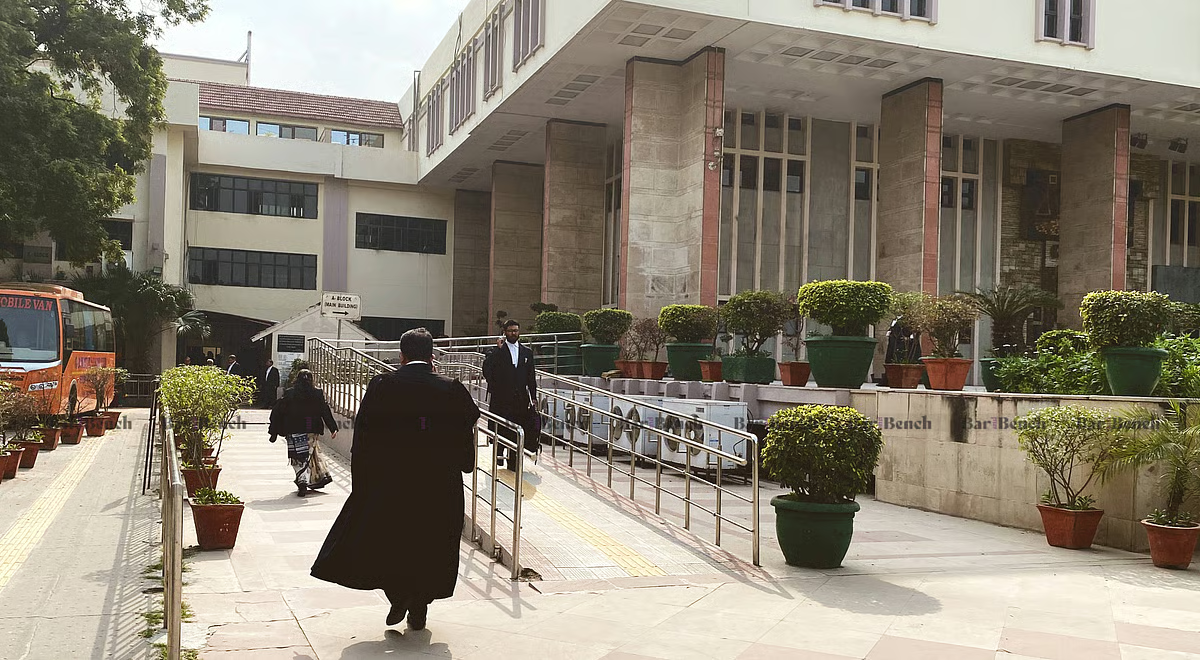
The matter is expected to be taken up by the Delhi High Court in the coming days.