
















Senior lawyer Indira Jaising alleges abuse of women judges by male colleagues
text_fields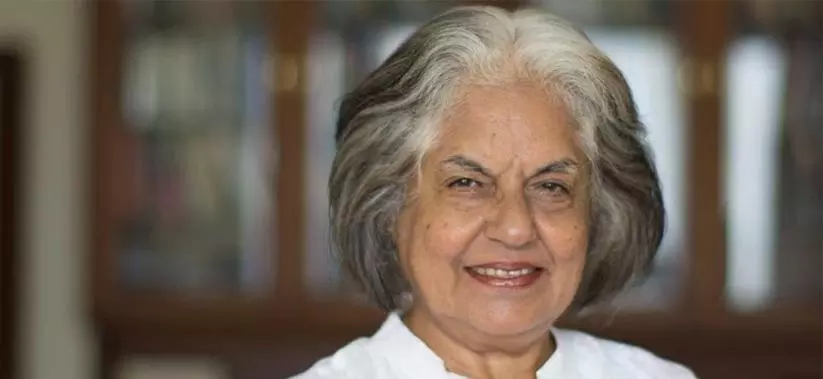

Senior lawyer Indira Jaising has described sexual harassment of women judges by male colleagues as a deeply entrenched and largely unspoken problem within the Indian judiciary, attributing it to the institution’s rigid hierarchies and feudal culture.
Speaking at the 29th D.S. Borker Memorial Lecture on ‘My Vision of India: 2047 A.D.’, Jaising said her professional experience included representing several women judges who had approached her with allegations of sexual harassment by male judges. She said the issue remained largely undiscussed despite its prevalence, Maktoob Media reported.
According to Jaising, the problem was linked to a hierarchical judicial culture in which junior judges, particularly women, were expected to show excessive deference to senior male judges.
She cited the experience of a woman judge she had represented, who had described to her a practice involving women district court judges when a High Court judge retires. Jaising alleged that women judges were expected to stand in a line, wear sarees of the same colour and shower flowers on male judges as they entered a dining area.
Jaising said such practices were treated as acceptable by senior judges and could have serious consequences for women working within the judiciary.
She also recounted an allegation involving the same woman judge, who, according to Jaising, was asked by a male judge to attend his 25th wedding anniversary and perform an “item number”. Jaising said the woman declined the request and subsequently lost her job. She presented the episode as an example of the professional consequences women judges could face when they resisted inappropriate demands from senior colleagues.
Jaising expressed hope that such practices and experiences would disappear from the judiciary by 2047.
Senior advocate and former Delhi High Court Chief Justice S Muralidhar, who spoke before Jaising at the event, also raised concerns about the treatment of women judges. He criticised what he described as hierarchical and feudalistic practices within the judiciary and referred to instances of women judges allegedly facing sexual innuendo and harassment from senior male colleagues.
The remarks by Jaising and Muralidhar highlighted broader concerns about the imbalance of power between senior and junior members of the judiciary, particularly when allegations involve senior judges.
Jaising also questioned how judicial time and resources are allocated, agreeing with several of Muralidhar’s concerns while differing with him over the use of the courts’ limited time. She argued that the time available to ordinary litigants was often dominated by wealthy individuals and corporate entities.
Her comments came during a wider discussion on judicial delays, institutional hierarchies and access to justice.
Towards the end of her address, Jaising turned to concerns about India’s constitutional framework, while identifying the Constitution itself as her principal source of hope for the future.
Responding to what she described as a question frequently raised by members of Gen Z about why she remained hopeful that circumstances could improve, Jaising said the Constitution provided that hope. She argued that as long as citizens retained the ability to prevent the ruling party from altering the Constitution, there would remain avenues to challenge government actions that violated constitutional principles.
Jaising also expressed concern over what she described as attempts to reshape the constitutional framework. She referred to the proposed linkage between delimitation and women’s reservation, concerns over delimitation without adequate safeguards for the federal structure, and the proposal for simultaneous elections across the country.
She further criticised instances in which party symbols had allegedly been allotted to breakaway factions of political parties, arguing that such decisions could weaken the representation of opposition parties in Parliament.
Jaising also voiced concerns about proposals that could increase the threshold, or “magic number”, required to amend the Constitution.
Her address ultimately connected concerns over sexual harassment within the judiciary with wider questions of institutional accountability, concentration of power and constitutional safeguards. She argued that institutions entrusted with protecting citizens’ rights must also be prepared to examine and reform internal hierarchies and practices that could undermine those rights.