










Cradles or coffins in Attappadi
text_fields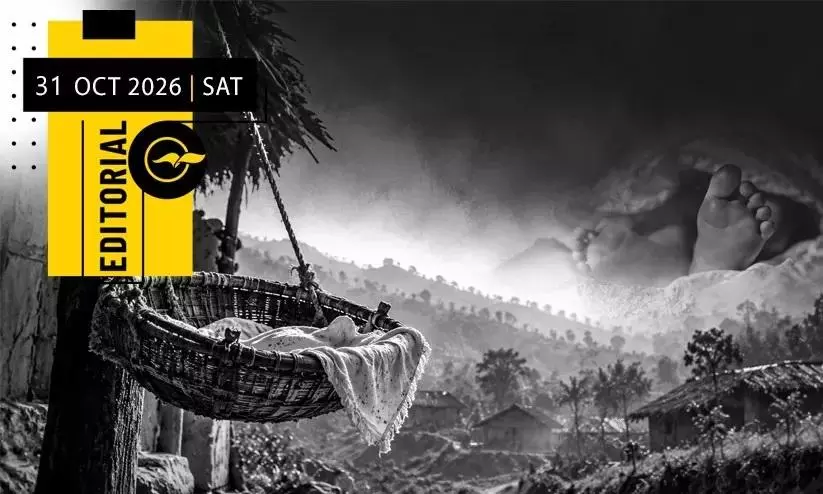

The Keralite community and the ruling class, who take pride in Kerala's progress and its high rankings in health indicators, should take a moment for a gaze at the tribal villages of Attappadi. Reports from the region suggest that a section of the population is on the verge of a 'silent genocide' due to malnutrition and inadequate medical care. After an interval, infant deaths are once again being reported continually in the tribal villages of Attappadi. Even as discussions are under way in the Assembly about taking Keralam's celebrated health model to new heights, the cries of the tribal communities continue to be heard. Three infants died in a single week. The toll this month has reached five, while ten infants have died in the past 100 days. The gravity of the situation becomes clear given the fact that around 150 childbirths have taken place at Kottathara Hospital in Attappadi during this short period. Maternal and infant mortality rates are among the most striking health indicators. According to the latest Sample Registration System survey, Keralam's infant mortality rate is estimated at eight. In other words, only eight out of every 1,000 babies born in Kerala die before reaching the age of one, while the national average is 25. While Kerala has maintained an infant mortality rate comparable to that of developed countries, the rate in its tribal areas is higher than the national average. This once again proves that tribal communities remain excluded from the state's health model.

The current infant mortality rate brings back memories of Attappadi in 2012. Around 60 infant deaths were reported between April 2012 and July 2013 alone. A report prepared by UNICEF after visiting the region at the time stated that the tribal speciality hospital did not even have iron and folic acid tablets for pregnant women. Most women in the region were suffering from anaemia. Meanwhile, a team of health experts appointed by the CPI(M) had also prepared a detailed set of guidelines. The committee, headed by Dr B Ekbal, found that all the schemes launched at various times for the welfare of tribal communities were a complete failure. The Centre also stepped in to help Attappadi address the dire situation at the time. It announced Rs 220 crore for the Kurumba Package and the Annamurapakkal (food security) Scheme. The state government also allocated a substantial amount for Attappadi. Although there was some progress in the short term, infant mortality continued to be a recurring problem. In 2017, 15 children died. A similar tragedy struck Attappadi in 2021, when nine children died in October. Following this, the state government formed an Assembly committee to study the issue. The committee was chaired by O R Kelu, who later took charge as the minister of the department. This remains the last official report on the health conditions of tribal communities in Attappadi. Implementing the recommendations in this report is the solution to the current problems. However, the unfortunate reality is that even O R Kelu showed little interest in the matter after becoming a minister.

The Legislative Assembly committee states at the beginning of its report that around 80 per cent of Attappadi's population suffers from anaemia due to inadequate nutrition. The reasons behind infant mortality in the region are so evident that there is no need to look elsewhere for explanations. Another major factor pushing tribal communities in the region towards genocide is sickle cell anaemia, a deadly genetic disorder. A study conducted in 25 selected Anganwadis in Attappadi in 2020 found that 65 per cent of tribal children in the region showed symptoms of sickle cell disease. The ruling class is looking at this horrific situation with complete indifference. Meanwhile, when health workers intervened effectively in the region, infant mortality declined significantly. However, people in Attappadi testify that the situation has changed with the change in government. Due to factors such as the transfer of health workers and a shortage of ambulances, pregnant women and children are not receiving adequate medical care. This situation must change. It is not enough for ministers and public representatives to visit Attappadi when there are cries of mourning and protests; practical solutions must be implemented without delay. Coffins should no longer be the guide to the cradles of the hills.