

















SC stays Madras HC order halting functioning of Tamil Nadu Waqf Board
text_fields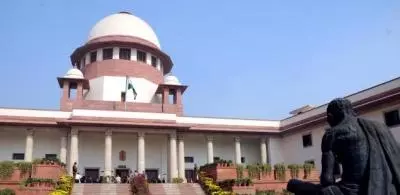

The Supreme Court on Thursday put on hold a Madras High Court order that had effectively stalled the functioning of the Tamil Nadu Waqf Board for not completing the nomination of two non-Muslim members, according to reports by The Hindu.
Earlier, in an order issued on January 8, the High Court had said that mandatory requirements under the law — including the nomination of a Bar Council representative and a person with professional expertise — had not been fulfilled, Live Law reported.
Waqf boards are statutory bodies that manage endowments created for religious, educational and charitable purposes under Islamic law, Scroll.in reported.
While hearing a petition filed by the Tamil Nadu Waqf Board, a bench led by Chief Justice Surya Kant, along with Justices Joymalya Bagchi and Vipul M Pancholi, took the view that the High Court’s direction had wrongly rendered the board non-functional, Bar and Bench noted.
The Chief Justice indicated that the principle of “doctrine of necessity” would apply, meaning that essential institutions cannot be paralysed due to procedural gaps.
During the hearing, senior advocate P. Wilson told the court that eight members had already been appointed to the board and that only three nominations were pending. He argued that the High Court had nevertheless held that the board could not function in this situation. The Supreme Court asked to be informed of the status of the remaining appointments at the next hearing.
The case is linked to changes brought in by the 2025 Waqf Amendment Act, which amended provisions of the 1995 law governing waqf administration. The amendments require that two members of each waqf board be non-Muslims and also mandate the inclusion of a Bar Council nominee.
The legislation has been contentious since its introduction. The 2024 amendment bill, which proposed wide-ranging changes to the waqf framework, was referred to a joint parliamentary committee after objections from the Opposition.
The committee later cleared the bill largely in line with proposals from the ruling National Democratic Alliance, while amendments suggested by Opposition members were rejected, and the bill was eventually passed by Parliament.
Opponents of the law have argued that the changes discriminate against Muslims and amount to undue interference in the management of waqf properties. The Union government has countered that the amendments are intended to curb misuse of waqf provisions and prevent encroachment on public and private land.
Several petitions challenging the validity of the Waqf Amendment Act are pending before the Supreme Court. While the court has declined to stay the law in its entirety, it has put certain provisions on hold, including one requiring a person creating a waqf to have been a practising Muslim for at least five years.
The court has also indicated that limits would apply to the number of non-Muslim members on waqf bodies, with the Central Waqf Council and state waqf boards having capped representation.
The Central Waqf Council has 22 members, while state waqf boards have 11 members.