


Rashtrapati Bhavan to remain closed to public from Jan 21 to 29
text_fields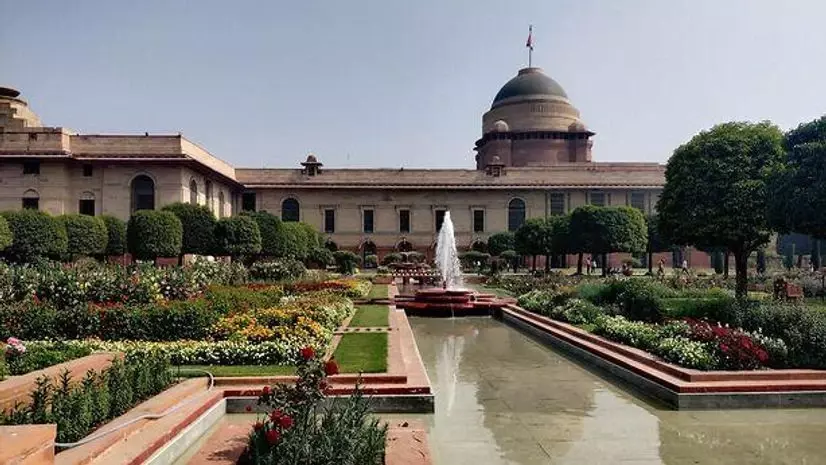

New Delhi: Public visits to Rashtrapati Bhavan (Circuit-1) will remain suspended from January 21 to 29 in view of the Republic Day Parade and the Beating Retreat Ceremony, an official of the President’s Secretariat said on Saturday.
Under normal circumstances, the Rashtrapati Bhavan Main Building is open to visitors from Tuesday to Sunday, except on gazetted holidays, in seven time slots between 9:30 a.m. and 4:30 p.m. The Rashtrapati Bhavan Museum Complex is also open to the public on these days, with visitors required to book their slots online.
Members of the public can also witness the Change of Guard Ceremony at the Forecourt of Rashtrapati Bhavan every Saturday from 8 a.m. to 9 a.m. However, the ceremony is not held if the day coincides with a gazetted holiday or if it is otherwise notified by the Rashtrapati Bhavan.
Apart from the Main Building, the 15-acre Amrit Udyan within the Rashtrapati Bhavan estate is a major tourist attraction. The special garden usually opens for public viewing in February. Known for offering a tranquil escape from the city, the Amrit Udyan features a striking display of flowers, trees, and fountains, drawing large numbers of visitors each year.
According to the Ministry of Defence, this year’s Republic Day Parade will present a unique blend marking 150 years of ‘Vande Mataram’, showcasing India’s military strength and rich cultural diversity. The parade will feature cutting-edge defence platforms, 30 colourful tableaux, a grand flypast by 29 aircraft, and a cultural performance by around 2,500 artists celebrating the themes of ‘Vande Mataram’ and ‘Atmanirbhar Bharat’.
President of the European Council António Costa and European Commission President Ursula von der Leyen will be the Chief Guests at this year’s Republic Day Parade, the Ministry said.
Rashtrapati Bhavan, the official residence of the President of India, was conceptualised in 1911 following the decision to shift the capital of British India from Kolkata to Delhi. According to the official website, the iconic H-shaped structure is spread over five acres within a vast 330-acre estate and houses 340 rooms across four floors, connected by nearly 2.5 km of corridors.
Construction of the building began in 1912 and continued for 17 years, culminating in its completion in 1929. Designed by renowned architect Edwin Lutyens, the structure incorporates several distinctive architectural elements, including a dome inspired by the Sanchi Stupa, chhatris, and intricate jali work reflecting traditional Indian design.
Originally built as the Viceroy’s House to serve as the residence of the British Viceroy of India, the building was renamed Government House after Independence on August 15, 1947. It was later renamed Rashtrapati Bhavan during the presidency of Dr. Rajendra Prasad, signifying its role as the official residence of the President of India.
Today, Rashtrapati Bhavan stands as a symbol of India’s cultural heritage and democratic ideals. Since becoming the seat of the Indian Presidency, it has hosted numerous significant national events, including defence investiture ceremonies for gallantry awards, swearing-in ceremonies of Presidents, Prime Ministers, and Cabinet Ministers, and major international diplomatic engagements.
“It remains a focal point for celebrating India’s Independence Day and Republic Day, along with other major national events and festivals,” the official website states.
With IANS inputs