










Political row as Giriraj Singh calls Mehbooba Mufti a ‘terrorist’
text_fields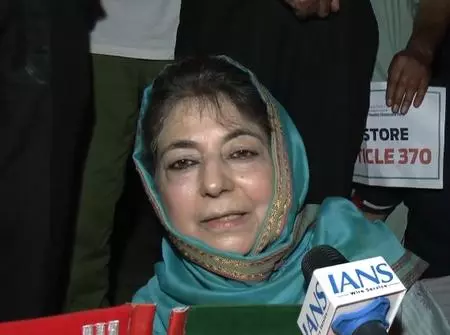
Photo: IANS

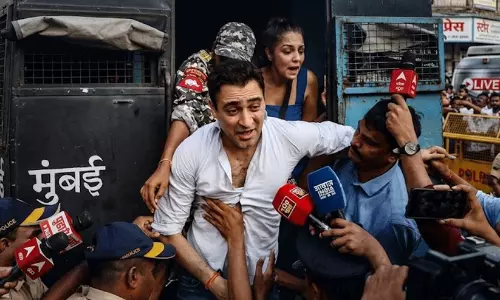
Union Minister and BJP leader Giriraj Singh on Tuesday sparked a political row by describing People's Democratic Party (PDP) president and former Jammu and Kashmir Chief Minister Mehbooba Mufti as a "terrorist", prompting the PDP to denounce the remarks as outrageous, irresponsible and unbefitting of a Union Minister.
Responding to Mufti's protest in Srinagar demanding the restoration of Articles 370 and 35A, Singh alleged that she had sided with terrorists for a long time. He claimed that during the period when the BJP was allied with the PDP, the party had tried to put her on the right path, but eventually ended the alliance after concluding that she had not changed, Maktoob Media reported.
Describing August 5 as a landmark date in India's history, Singh said it deserved to be commemorated alongside Independence Day and Republic Day. He argued that the abrogation of Article 370 had fulfilled the vision of Sardar Patel and the aspirations of millions of Indians by establishing one nation, one flag, one Prime Minister and one Constitution.
The PDP condemned Singh's remarks, with party MLA Waheed-ur-Rehman Parra saying they were outrageous, irresponsible and reflected political intolerance. Parra argued that using such language against a former Chief Minister and a senior Muslim woman leader revealed prejudice rather than political maturity, adding that the statement reflected Singh's own mindset.
AIMIM president and Hyderabad MP Asaduddin Owaisi also criticised the Union Minister, pointing out that the BJP had previously formed a coalition government with the PDP in Jammu and Kashmir. He questioned how the BJP could now level such allegations against Mufti after having shared power with her.
The controversy unfolded as political parties in Jammu and Kashmir observed the seventh anniversary of the abrogation of Article 370.
Mufti took part in protests demanding the restoration of Jammu and Kashmir's special constitutional status under Articles 370 and 35A, which were revoked by the Union government on August 5, 2019, when the former state was reorganised into the Union Territories of Jammu and Kashmir and Ladakh.
She alleged that authorities had detained several PDP leaders and placed party workers under house arrest ahead of the demonstrations.
Thanking party leaders and workers for holding what she described as peaceful protests despite the restrictions, Mufti said the demonstrations showed that, in her view, the aspirations of the people of Jammu and Kashmir for dignity, justice and the restoration of Article 370 remained strong despite what she called attempts to project normalcy.
Critics of the 2019 decision have maintained that it was implemented without the consent of the people of Jammu and Kashmir. They have cited the prolonged communications blackout, mass detentions of political leaders, an increased security presence and restrictions on civil liberties in the aftermath of the move. They have also argued that the promised improvements in development, employment and normalcy have largely failed to materialise.
They further contend that the revocation of Articles 370 and 35A diminished Jammu and Kashmir's constitutional autonomy, altered its political status and intensified concerns over land rights, identity and demographic change.