













Not BJP or Modi, but ‘Mohammed Deepak’ is real India as attacks on minorities rise
text_fields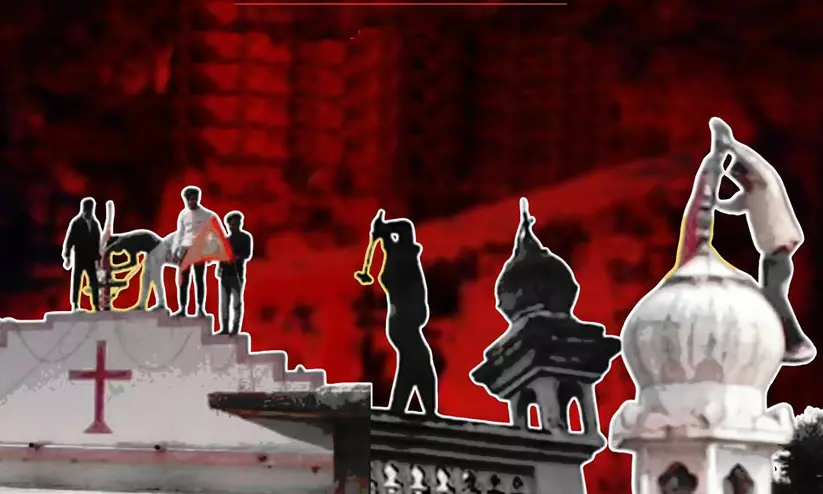

A public hearing at the Constitution Club of India on Tuesday brought together legal experts, activists, former judges, MPs, journalists and religious leaders to call out what they described as a growing pattern of atrocities targeting minority communities, with speakers criticising the chanting of religious hymns in front of mosques as deliberate provocation.
They asserted that neither the BJP nor Prime Minister Narendra Modi represented the idea of India, instead invoking the figure of the “true Indian” who embraces composite identities such as “Mohammed Deepak” as a symbol of pluralism.
Organised by Indian Muslims for Civil Rights in collaboration with the Association for Protection of Civil Rights, the hearing focused on alleged incidents of violence, vandalism, hate speech and legal intimidation directed at places of worship belonging to minorities, with speakers arguing that these developments point to a systematic erosion of constitutional guarantees rather than isolated or accidental events.
Coordinated by APCR national secretary Nadeem Khan, the meeting heard testimonies detailing damage to religious structures, threats to caretakers and disruptions of religious practices, while participants warned that such actions were increasingly normalised.
Several speakers stressed that institutional safeguards were weakening, as calls were made for stronger accountability mechanisms and stricter enforcement of existing laws, particularly those meant to protect religious freedom.
Rajya Sabha MP Sanjay Singh, while urging unity against injustice, questioned the intent behind performing the Hanuman Chalisa outside mosques instead of temples, and argued that those who engage in intimidation and disorder cannot be seen as representing the nation.
He also drew attention to what he described as a widening stream of oppression affecting not only Muslims but also Dalits, Adivasis, backward classes, Parsis and other marginalised groups, citing the filing of multiple cases against dissenters, including elderly individuals.
Members of Parliament from different regions echoed similar concerns, with Srinagar MP Aga Syed Ruhullah Mehdi asserting that attacks on culture, identity and worship had made the idea of a Hindu Rashtra a lived reality, while alleging that institutions meant to act as checks and balances were instead enabling violations.
He urged citizens to assert their rights firmly and lawfully. Lakshadweep MP Muhammed Hamdulla Sayeed highlighted what he called sustained interference in the governance of the Muslim-majority islands, saying that political appointees had attempted to dismantle functioning local institutions, a move that was challenged in court.
Christian activists at the hearing spoke about attacks and humiliation faced by their community, particularly in Odisha, where allegations included coercive practices during communal violence, while Sikh representative Sardar Daya Singh recalled instances of interfaith solidarity, including the use of gurdwara premises to facilitate Muslim prayers when access elsewhere was denied.
Samajwadi Party MP Ziaur Rahman Barq warned that repeated violations of the Places of Worship Act, 1991, which mandates the preservation of the religious character of sites as they existed in 1947, risked becoming an unforgivable betrayal of constitutional intent, as he argued that persistent targeting of dargahs, madrasas and graveyards suggested a deliberate pattern.
Senior advocates and former judges, including Fuzail Ahmad Ayyubi and Justice Iqbal Ansari, cautioned that communal polarisation appeared engineered rather than organic, and that the gravest threats to the Constitution were emerging from within institutions and society itself.
While the organisers said the hearing aimed to document grievances and promote communal harmony, they also condemned disruptions during the event, alleging misinformation and intimidation, and warned that shrinking civic space and sensationalised reporting posed serious challenges to democratic engagement.