
















Nepal introduces new Rs 100 note featuring map that includes Kalapani, Lipulekh, and Limpiyadhura
text_fields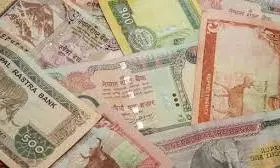

Nepal has released new Rs 100 banknotes featuring a map that includes the Kalapani, Lipulekh, and Limpiyadhura regions — territories that India maintains fall within its borders.
The updated notes entered circulation on Thursday.
According to the Nepal Rastra Bank (NRB), the inclusion of the map follows a 2020 government decision under then–Prime Minister K P Sharma Oli, when the administration approved a revised political map showing the three regions as part of Nepal. Parliament later endorsed the map.
India had opposed the move at the time, calling it a unilateral decision and describing the map as an artificial expansion of territorial claims.
The central bank said the map had already appeared on earlier versions of the Rs 100 note and has now been updated as per government direction. An NRB spokesperson clarified that among Nepal’s banknote denominations — Rs 10, Rs 50, Rs 500, and Rs 1,000 — only the Rs 100 note carries the map.
The new note bears the signature of former governor Maha Prasad Adhikari and carries the issuance date of 2081 BS, corresponding to 2024.
The design features Mt Everest on the left and a watermark of the rhododendron, Nepal’s national flower, on the right. A faint green map of Nepal appears in the background, alongside the Ashoka Pillar printed with the text, “Lumbini, the birthplace of Lord Buddha.” The reverse side of the note depicts a horned rhino.
Security features include a security thread and an embossed black dot to assist visually impaired users.
Nepal shares an over 1,850-km border with five Indian states — Sikkim, West Bengal, Bihar, Uttar Pradesh, and Uttarakhand.