













India won’t initiate normalisation of ties with Pakistan, responsibility lies with Islamabad: Shashi Tharoor
text_fields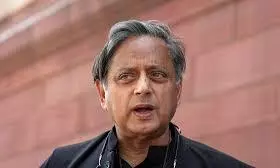

Senior Congress leader Shashi Tharoor on Tuesday said India no longer has the appetite to take the first step towards normalising relations with Pakistan, stressing that the responsibility now rests with Islamabad to prove its sincerity by dismantling terror networks on its soil.
Speaking at the launch of 'Whither India-Pakistan Relations Today?', an anthology edited by former ambassador Surendra Kumar, Tharoor argued that India’s repeated attempts at outreach had been met with hostility.
“Given the record of Pakistani behaviour, the onus is on them. They're the ones who have to take the first steps to show some sincerity about dismantling terror infrastructure on their soil,” he said.
Tharoor noted that every major Indian gesture of reconciliation — from Jawaharlal Nehru’s 1950 pact with Liaqat Ali Khan, to Atal Bihari Vajpayee’s 1999 bus journey to Lahore, and Narendra Modi’s 2015 Lahore visit — was followed by betrayal.
“Why can't they be serious about shutting down these terror camps? Everyone knows where they are. The UN committee has a list of 52 names of individuals, organisations, and places in Pakistan. It's not that Pakistan doesn't know they exist. Shut them down, arrest some of these characters, show some serious intent,” he said.
The Congress MP recalled how India had presented “overwhelming evidence” of Pakistani involvement in the 2008 Mumbai terror attacks, including dossiers and live intercepts, yet “not one mastermind has been prosecuted.”
He emphasised that India had shown “extraordinary restraint” after such provocations, but incidents eventually led to surgical strikes in 2016 and ‘Operation Sindoor’.
Referring to his book Pax Indica (2012), Tharoor added: “I had warned that if there was ever another Mumbai-like attack of comparable impact, with clear evidence of Pakistani complicity, the restraint we had shown in 2008 might become impossible and all bets would be off. And indeed, that is exactly what happened.”
Tharoor underscored that peace on the borders was essential for India’s national interest, drawing parallels with historical reconciliations such as France and Germany post-World War II and the US-Vietnam relationship.
The discussion also featured former foreign secretary Kanwal Sibal, former Indian ambassador to Pakistan T C A Raghavan, former Army chief General Deepak Kapoor, and academic Amitabh Mattoo.