












India rejects UN report on endangered traditional culture as ‘inaccurate’
text_fields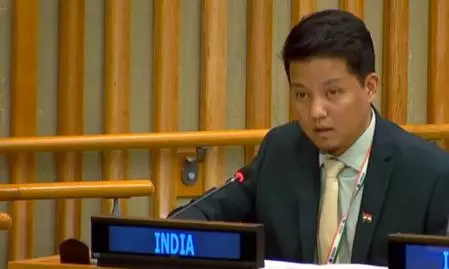

United Nations: India has strongly criticised a UN report that claimed the country’s traditional cultural expressions are under threat, calling the assessment “inaccurate” and lacking empirical evidence.
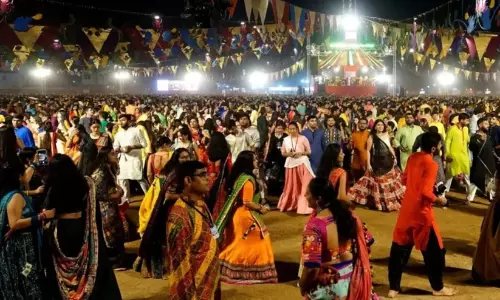
Speaking at the General Assembly’s Third Committee on Friday, Lok Sabha MP Indra Hang Subba said India’s rich heritage of artistic, literary, musical and craft traditions continues to flourish nationwide.
India’s “cultural economy, including traditional arts, crafts, and performances, continues to thrive with the robust popular and government support,” said Subba, a member of the Sikkim Krantikari Morcha and part of India’s UN delegation.
He dismissed the report’s claim of declining demand for traditional cultural expressions, stating, “We find no empirical data that substantiates the claim of declining demand for India's traditional cultural expressions.”
The report, authored by Alexandra Xanthaki, the UN’s Special Rapporteur for Cultural Rights, alleged that India’s cultural expressions face diminishing demand and are threatened by middlemen and copyright laws. It also controversially described India’s Copyright Act as “communal” and inadequate for protecting traditional knowledge and art.
Subba rejected this characterisation, saying India’s legal framework, including the Copyright Act and Information Technology Act, offers strong protections for creators, including licensing, royalty collection, and enforcement against infringement.
Xanthaki’s findings were reportedly based on submissions from the Centre for Advanced Studies in Cyber Law and Artificial Intelligence at Rajiv Gandhi National University of Law, Punjab.
She further argued that AI-generated art poses a threat to traditional forms by imitating them without credit or compensation. Subba countered that digital platforms have expanded the reach and demand for traditional cultural expressions.
Xanthaki also criticised AI’s limitations in replicating Indian classical music and dance, noting that microtonal variations in ragas and codified gestures in Tamil Nadu’s dance forms are difficult for AI to reproduce, resulting in a loss of emotional depth.
Her report referenced a legal case filed in the Delhi High Court by major publishers against OpenAI, alleging unauthorised use of their content to train ChatGPT.
(Inputs from IANS)