















History Congress raps NCERT for absolving British, blaming Congress for Partition
text_fields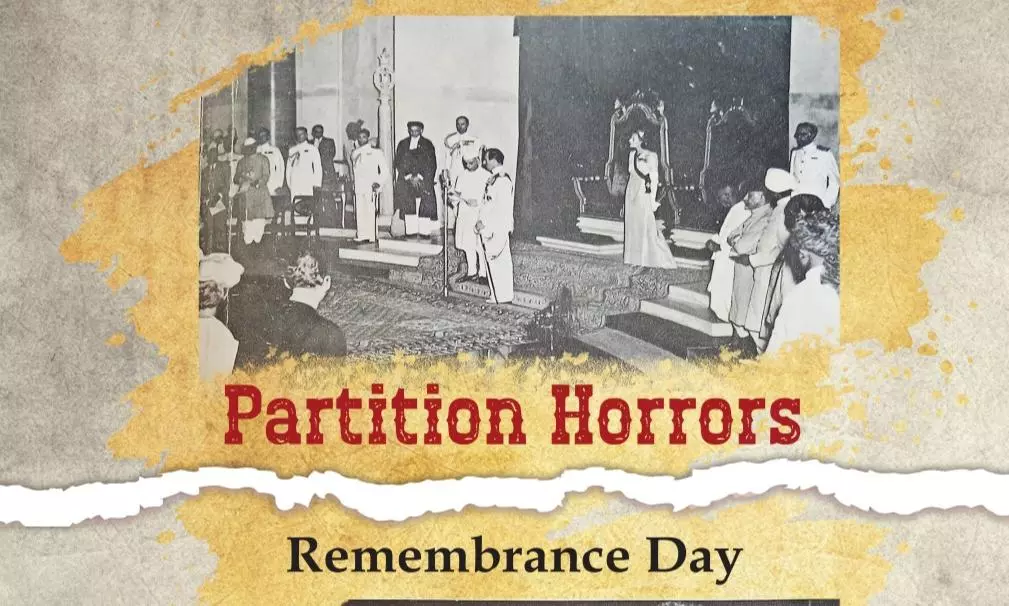

The Indian History Congress has condemned the new NCERT module on Partition Horrors Remembrance Day, stating that it attempts to portray British rulers in a favourable light while placing accountability for Partition on the Congress alongside the Muslim League, by distorting history so as to infuse communal hatred towards the Muslim community in young minds and dexterously whitewashing colonial rule.
The historians argued that the module undermines the legacy of the national movement and risks instilling a communalised reading of India’s past among schoolchildren.
Here is the trimmed text of the statement released by the Indian History Congress:
The Indian History Congress strongly protests the falsehoods being spread among schoolchildren through the Special Module on Partition Horrors Remembrance Day by the NCERT and the Ministry of Education. These materials hold both the Muslim League and the Indian National Congress responsible for Partition, while giving the British colonial rulers a clean chit.
The module wrongly claims that the British sought to preserve Indian unity through the 1942 Cripps Mission and the 1946 Cabinet Mission Plan, blaming Congress for rejecting them and driving Jinnah towards direct action and communal violence. It argues that Partition was caused by Jinnah, accepted by Congress, and merely formalised by Mountbatten.
The reality, however, was the long-term British strategy of divide and rule, pursued since the revolt of 1857, when Hindus and Muslims had fought shoulder to shoulder. This policy introduced separate electorates, encouraged communal organisations, and nurtured divisions in Indian society, while targeting nationalists led by the Congress.
The NCERT modules repeat colonial interpretations by criticising Congress leaders for seeking Hindu-Muslim unity, accusing them of whitewashing history and blaming the British for communalism. They invoke the argument that Hindus and Muslims were historically in conflict and place the responsibility for Partition not on colonial rule but on Indian nationalists and Muslims, in line with the present regime’s attempts to spread Islamophobia.
The letter notes that Jinnah’s 1940 call for a separate Muslim nation is quoted at length, but the two-nation theory of V.D. Savarkar floated much earlier, in 1937 is omitted. While Savarkar described Hindus and Muslims as two antagonistic nations long before Jinnah did, Hindu communalists are never held accountable for Partition, whereas nationalist leaders are labelled as culprits.
The historians stressed that the entire spectrum of the national movement—Moderates, Extremists, Gandhians, Socialists, Communists and Revolutionaries—believed in India’s civilisational capacity to live with diversity, and that Gandhi himself gave his life for communal harmony. Yet, the module dismisses his efforts for unity as an unrealistic sentiment, ignoring that his assassination was the result of Hindu communal propaganda.
The statement concludes that the module is not aimed at showing the dangers of communal ideology but at promoting hatred against Muslims. It highlights only the suffering of Hindus and Sikhs during Partition while omitting the retaliatory violence faced by Muslims, even though Gandhi’s last fast was to protect Muslims in Delhi. By feeding such distorted and polarising history to schoolchildren, the NCERT is endangering the values of secularism, inclusivity, and democracy.