
















Hindu-Muslim ties not just about tolerance, but collaboration: Amartya Sen
text_fields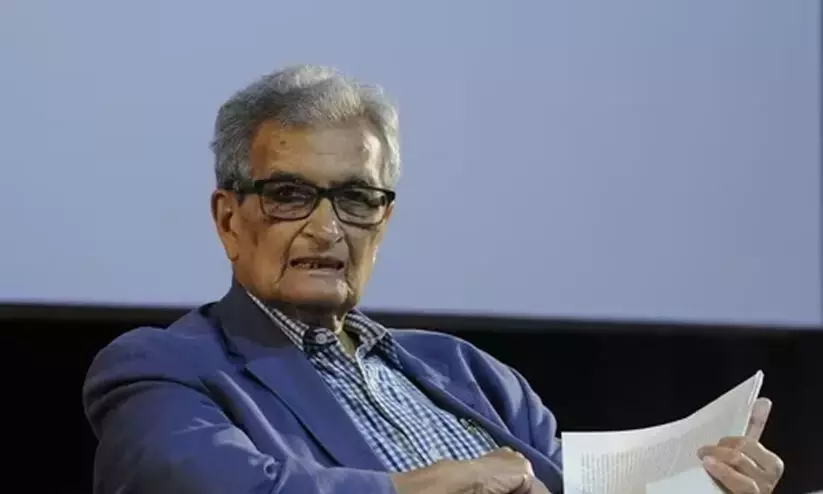

Kolkata: Nobel laureate economist Amartya Sen said on Friday that the relationship between Hindus and Muslims of India is not about tolerance but collaboration. This could be seen historically in the country’s music, literature and architecture, PTI reported.
Speaking at a public discussion here on the theme 'India's Youth: Social Opportunities They Should Have’, the 91-year-old said that there is an urgent need for India to move beyond passive tolerance towards active communal cooperation, what he described as "yukta sadhana", or "joint practice".
Citing historical precedents, the professor highlighted the contributions of Dara Shikoh, the eldest son of Mughal emperor Shah Jahan, who translated fifty Upanishads from Sanskrit to Persian.
His pivotal work, he noted, played a crucial role in globalising Hindu philosophy, forming the basis for subsequent translations into languages such as German.
The economist also spoke of his maternal grandfather, Kshitimohan Sen, a renowned scholar and early proponent of "yukta sadhana", whose seminal work "Bharate Hindu Musalmaner Yukta Sadhana" examined the shared cultural, spiritual, and intellectual traditions of Hindus and Muslims in India.
"The relationship between Hindus and Muslims is not just about tolerance. It's about collaboration, something we've seen historically in music, literature, and architecture," he said.
The book, long out of print, was relaunched by the Pratichi Trust on Friday, with a new introduction penned by the economist, reaffirming its contemporary relevance in light of rising social and political polarisation.
He also expressed his concern over the ongoing election-related exercise in Bihar, the special intensive revision (SIR), warning that it would “disenfranchise” the poor and marginalised. He also raised concerns over rising linguistic intolerance in the country, particularly against Bengali-speaking people.