


Delhi SIR: ECI to create mechanism to include voters whose houses were demolished
text_fields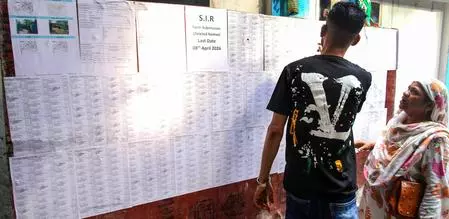
Photo: IANS

Delhi Chief Electoral Officer Ashok Kumar on Monday said that the Election Commission of India (ECI) would develop a system to ensure that voters whose houses have recently been demolished are not left out of the ongoing special intensive revision of electoral rolls, according to The Hindu.
His statement came ahead of the start of the door-to-door enumeration process in Delhi under the third phase of the voter roll revision exercise. The month-long survey will be conducted from June 30 to July 29 in Delhi, along with Jharkhand, Karnataka, Maharashtra, and Meghalaya, Scroll.in reported.
Speaking at a press conference, Kumar said that some voters may find that their registered addresses no longer exist because their homes were demolished before Booth Level Officers (BLOs) visited for verification. He acknowledged that such voters might not be able to arrange alternative residence documents within the revision period and said the authorities would create a mechanism to ensure their names remain included.
Addressing concerns regarding homeless voters, Kumar said BLOs would visit every registered address, including temporary locations. He explained that even if a person’s registered location was an unusual place, such as a spot near a flyover, officials would still attempt to verify their details. Those who are not included in the draft list would have the opportunity to file claims and objections after its publication.
Delhi currently has 13,033 polling booths serving around 1.4 crore registered voters.
The draft electoral roll is scheduled to be released on August 5. Voters will be able to submit claims and objections until September 4, with authorities expected to complete disposal of these cases by October 3. The final electoral roll will be published on October 7.
The third phase of the special intensive revision is being carried out across 16 states and three Union Territories. After this phase, the exercise will cover the entire country except Himachal Pradesh, Jammu and Kashmir, and Ladakh, where the schedule will be announced later due to the Census process and difficult weather conditions.
The first phase of the revision was conducted in Bihar in 2025, followed by the second phase covering 12 states and Union Territories.
The exercise has faced criticism from several quarters over concerns that eligible voters could be removed from electoral rolls. Multiple petitions challenging the revision process were filed before the Supreme Court.
On May 27, the Supreme Court upheld the legality of the ECI’s special intensive revision exercise, stating that it supported the constitutional requirement of ensuring free and fair elections. However, the court clarified that the Election Commission’s verification process for voter inclusion does not give it authority to determine an individual’s citizenship status.