



















Delhi court allows Umar Khalid 2 weekly video meetings with family
text_fields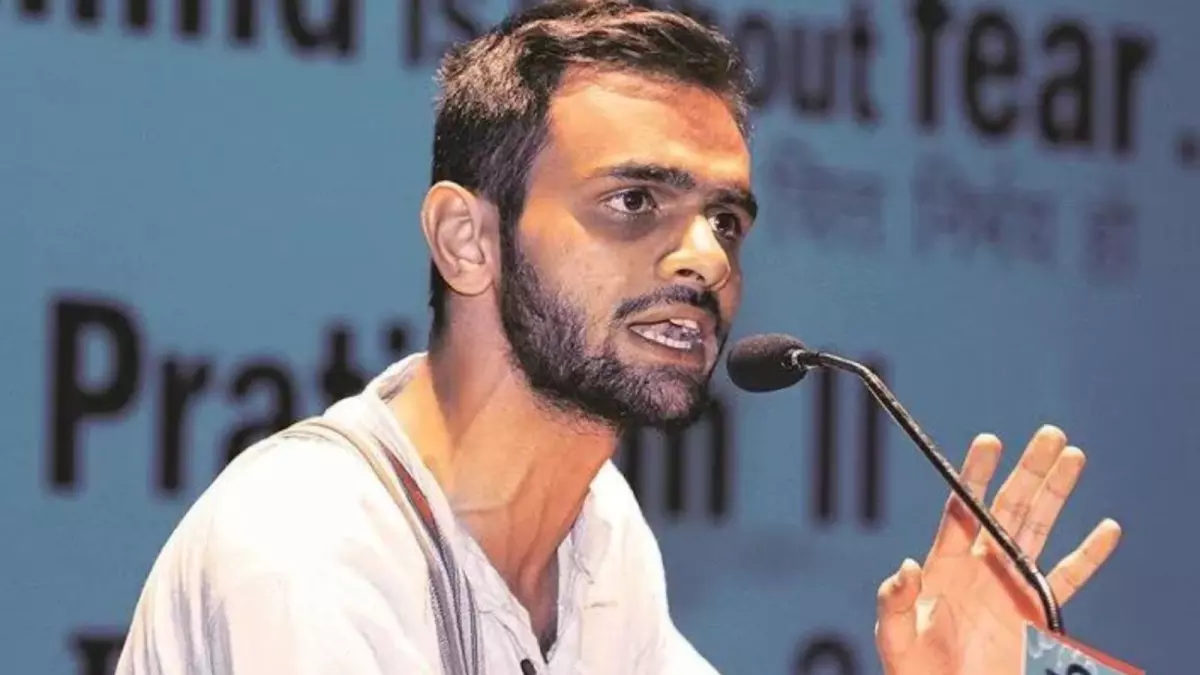

New Delhi: A Delhi court has allowed jailed student activist Umar Khalid to have two e-mulakats (video meetings) every week with his mother and other family members, observing that he had availed the facility for the past six years without violating any prison rules.
Additional Sessions Judge Sameer Bajpai of the Karkardooma Courts passed the order while disposing of an application filed by Khalid, an accused in the larger conspiracy case linked to the 2020 northeast Delhi riots.
"The applicant has been using two e-mulakats a week for the last six years and has not violated any rule of the Delhi Prisons Rules. The applicant is allowed to have two e-mulakats per week for the purpose of talking to his mother and other family members," the court said.
Khalid had approached the court seeking restoration of two weekly e-mulakats, stating that he had been allowed the facility since his incarceration but that it had been reduced to one video meeting per week from May 2026.
Appearing for Khalid, his counsel argued that the restriction was imposed despite there being no violation of prison rules on his part.
The jail authorities opposed the plea, contending that under the applicable rules Khalid was entitled to only one e-mulakat every week and that the earlier practice of allowing two had been discontinued.

After hearing both sides, the court noted that Khalid had been availing two weekly e-mulakats for the last six years without breaching any provision of the Delhi Prison Rules.
In view of these circumstances, the court directed the jail authorities to allow Khalid two e-mulakats every week to speak with his mother and other family members. It also ordered that a copy of the order be sent to the Superintendent of the concerned Central Jail.
Earlier this month, the same court dismissed the regular bail pleas of Khalid and co-accused Sharjeel Imam in the larger conspiracy case, holding that it was bound by the Supreme Court's earlier order refusing them bail and that their fresh applications were not maintainable.
The trial court observed that it had "no option but to follow" the apex court's order, which permitted the accused to renew their bail pleas only after the examination of protected witnesses relied upon by the prosecution or on the expiry of one year from the Supreme Court's January 5 order, whichever occurred earlier.
The case relates to the alleged larger conspiracy behind the communal violence that erupted in northeast Delhi in February 2020.
Khalid and Imam are among several accused booked under the Unlawful Activities (Prevention) Act (UAPA) and other penal provisions.
Earlier this year, the Supreme Court rejected the bail pleas of Khalid and Imam, holding that the prosecution material disclosed prima facie grounds attracting the statutory bar on granting bail under Section 43D(5) of the UAPA.

At the same time, the apex court granted bail to five other accused in the case — Gulfisha Fatima, Meeran Haider, Shifa Ur Rehman, Mohd Saleem Khan and Shadab Ahmed.
More recently, the Supreme Court granted six months' interim bail to Tasleem Ahmed and Khalid Saifi while referring to a larger Bench the question of whether prolonged incarceration and delay in trial could justify the grant of bail despite the restrictions under Section 43D(5) of the UAPA.
Observing that different Benches of the apex court had expressed divergent views on the interpretation of the three-judge Bench ruling in Union of India vs K.A. Najeeb, a Bench of Justices Aravind Kumar and Prasanna B. Varale directed the registry to place the matter before the Chief Justice of India for constituting an appropriate Bench.
The Bench also took note of the subsequent judgment in Syed Iftikhar Andrabi vs National Investigation Agency (NIA), where another coordinate Bench expressed reservations over certain aspects of the ruling that denied bail to Khalid and Imam while granting relief to five other accused in the Delhi riots conspiracy case.
Without commenting on the merits of the prosecution's case, the Supreme Court granted interim bail to Ahmed and Saifi for six months, observing that they had undergone substantial incarceration and that the trial was unlikely to conclude in the immediate future.

With IANS inputs