







Chennai temple serves daily iftar to Muslims for over 40 years
text_fields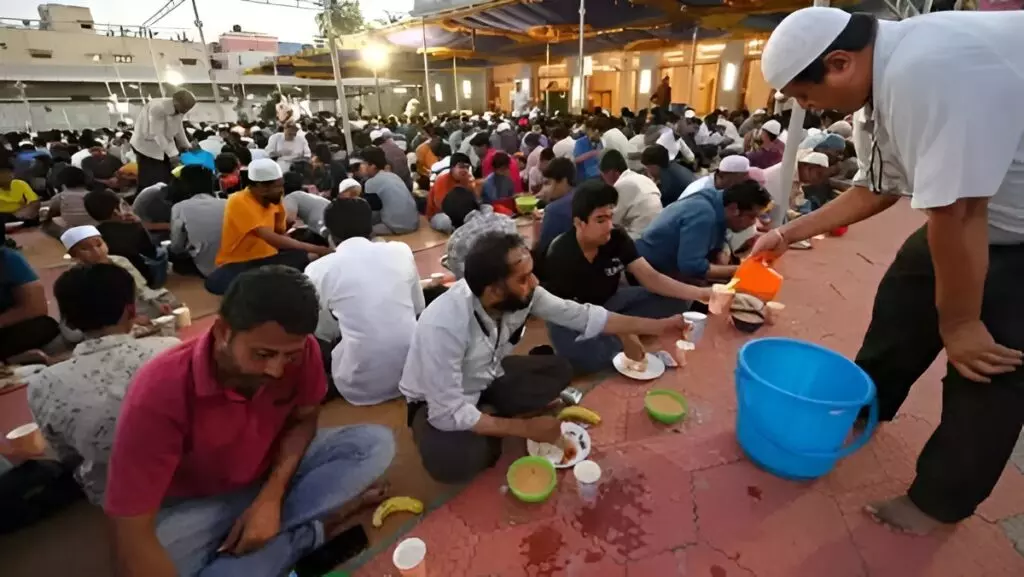

Chennai: Amid rising Islamophobia and hate speech in parts of India, a quiet tradition in Chennai stands as a powerful counter-narrative rooted in compassion, shared humanity, and interfaith solidarity.
In Mylapore, the Sufidar Temple has served daily iftar meals to Muslims during Ramadan for over 40 years. What started as a personal act of gratitude has grown into one of the city’s most enduring examples of communal harmony.
The tradition was initiated in the early 1980s by Puj Dada Ratanchand Sahib, popularly known as Dada Ratanchand or Dadaji. Born on November 4, 1926, in Hyderabad, Sindh (now in Pakistan), to Rukmini Devi and Bhai Pessumal Dodani, Ratanchand migrated to Chennai as a Hindu refugee during the 1947 Partition of India.
After rebuilding his life in the city, Ratanchand became a devoted disciple of Sufi saint Shahenshah Baba Nebhraj Sahib, whose teachings emphasised unity, love, and service beyond religious boundaries. Inspired by these ideals, he founded the Sufidar Trust and established a small spiritual gathering space on Waltax Road with just 30–40 devotees. As the community grew, the temple moved to Dr. Radhakrishnan Road in Mylapore, evolving into a unique spiritual centre blending Hindu devotion with Sufi-inspired inclusivity and welcoming people of all faiths.
Driven by gratitude toward the city that gave him refuge and guided by a philosophy of transcending religious divisions, Ratanchand began preparing vegetarian iftar meals for Muslims during Ramadan. The initiative soon became an annual practice, continuing uninterrupted for over four decades.
Today, more than 100 volunteers — including members of the Sindhi community, Hindus, Muslims, and people from diverse backgrounds — come together each Ramadan to cook meals for nearly 1,000 to 1,200 fasting individuals every day. Preparations begin as early as 7:30 a.m. in the temple kitchens, where volunteers prepare a rotating menu including vegetable biryani, fried rice, channa rice, pulao, vegetable pickles, sweets, dates, fresh fruits, and saffron milk.
By around 5:30 p.m., the meals are packed into vehicles and transported to the historic Wallajah Big Mosque in Triplicane, a landmark mosque built in the late 18th century by the Arcot royal family. Volunteers personally serve the food at the mosque, often wearing skull caps as a mark of respect, reinforcing bonds of mutual trust and shared community.
The initiative has long enjoyed support from local Muslim leadership. Prince of Arcot Nawab Mohammed Abdul Ali has praised the practice as a living example of Hindu–Muslim unity and mutual respect. Following Dada Ratanchand’s passing, the tradition continues under the stewardship of community leaders such as Ram Dev and a dedicated team of volunteers, who have preserved the spirit of service envisioned by its founder.

In recent years, the practice has gained renewed attention on social media and national media outlets, celebrated as a beacon of harmony in increasingly polarised times. Rooted in Sufi ideals of universal love, gratitude, and seva, the Sufidar Temple’s Ramadan initiative remains a reminder that everyday acts of kindness can bridge religious divides.
At a time when communal tensions often dominate headlines, this Chennai temple quietly keeps alive an alternative story — one where faith becomes a bridge rather than a boundary, and unity is practised not through slogans but through shared meals and shared humanity.