















‘Broad daylight dacoity’: SC questions 10-fold gap in cancer drug pricing
text_fields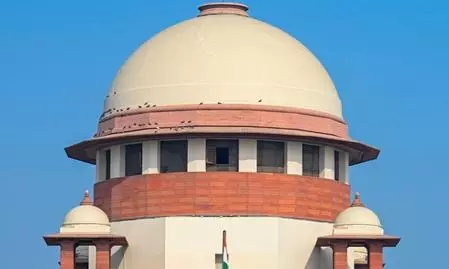

New Delhi: The Supreme Court on Tuesday questioned the wide gap between the price at which manufacturers sell medicines to retailers and the maximum retail price (MRP) printed on packs, calling it “broad daylight dacoity” when a cancer drug bought for Rs 2,700 is sold at an MRP of Rs 27,000.
A Bench of Justices Vikram Nath and Sandeep Mehta made the remarks while hearing public interest litigations (PILs) on regulating medicine prices, generic drugs, medical devices and prescription practices.
“There are medicines, essential cancer medicines, whose MRP is 27,000 and the PTR (Price to Retailer) is 2700. That’s absolute dacoity, broad daylight dacoity. How can a patient be cheated on a medicine that the manufacturer sells to the retailer at 2700, while the MRP is printed at 27,000? Ten times!” Justice Mehta said.
He asked why regulators tasked with overseeing medicine pricing had remained silent on such disparities.
“It is very surprising that the authorities who are supposed to decide on this are absolutely silent. We need not spell out the reason for that,” Justice Mehta observed.
The Court also asked why manufacturers should be allowed to fix MRPs several times higher than the actual price at which they supply medicines to retailers.
“Why this disparity at all? A medicine which is, as a matter of fact, sold by the manufacturer to the retailer at 10% of its MRP, why has it got this high MRP? Why should there be such a disparity?” the Bench asked.
PIL petitioner Kishan Chand Jain, appearing in person, told the Court there was no effective regulatory mechanism governing the initial fixation of prices for medicines outside the controlled-price list.
“For instance, a manufacturer wants to launch a medicine today. It can fix it at one rupee; it can fix it at 1,000 rupees. No regulatory regime controls price fixation. Only after he has fixed it, there is a restriction that he cannot increase it by more than 10%,” Jain submitted.
He cited documents showing large differences between MRP and PTR.
According to the submissions, one medicine had an MRP of Rs 73 against a PTR of Rs 22.75, while another carried an MRP of Rs 61 against a PTR of Rs 9.65.
Jain argued that medical devices could also carry substantial mark-ups and needed an effective price-fixation mechanism.
The Justice Nath-led Bench also examined issues around generic medicines.
PIL petitioner Dr Sanjay Kulshresthra said generics could make treatment more affordable, but concerns about their quality and reliability had to be addressed for generic prescribing to work effectively.
He submitted that when a doctor prescribes a generic without specifying a brand, the choice of manufacturer effectively passes to the pharmacist, who has not examined the patient and may have commercial considerations.
Kulshresthra suggested that patients should retain a choice between generic and branded medicines.
Additional Solicitor General K.M. Nataraj, appearing for the Union government, said the Centre was not treating the proceedings as adversarial and would consider areas where the existing system could be improved.
Senior advocate Kapil Sibal, appearing for the Indian Pharmaceutical Alliance, submitted that manufacturers were not responsible for the high prices ultimately paid by patients and contended that retailers were earning substantial profit margins.
The Court, however, questioned that contention in the context of the MRP printed on medicines, noting that the manufacturer itself fixes the MRP.
The matter has been posted for further hearing on September 29, when the Bench will hear more submissions from Sibal and the Union government.
(Inputs from IANS)