














The curious pair of Zionism and Hindutva
text_fields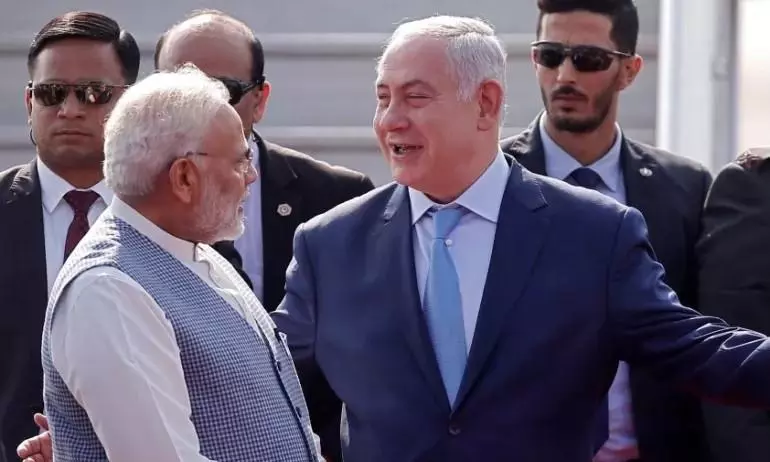

Right-wing politicians often resort to nationalistic and ethnic sentiments when their policies face challenges. The dividing line between nationalism and nationalistic politics is so narrow that it is often difficult to draw the differentiating line.
Curiously, we have two stark examples to cite in the current geopolitical landscape. One is Zionism based in Israel and and the other Hindutva based in India.
What recently made Zionism once again a talking point is the landmark motion passed by the Green Party of England and Wales. The Green Party has formally adopted a policy that Zionism is racism, and anti-Zionism should not be equated with anti-Semitism. Further, it called for a full arms embargo on Israel, and the party declared its support for Palestinian self-determination. Though this is not a big deal for Israel, as the Greens have only nominal representation in the Parliament, it's a significant step that is politically relevant. The bottom line of the resolution is that Zionism, a political ideology of Jewish identity, is ethnocentric and therefore racist, and opposing Zionism does not amount to anti-Semitism. Interestingly, the leader of the Green Party, Zack Polanski, is a Jew.
As the name suggests, the Green Party focuses mainly on environmental issues. However, it's not purely an environmental party but a left-wing progressive political party that has four MPs in the UK House of Commons.

Unsurprisingly, the Netanyahu government immediately called the decision antisemitic. It barred Polanski from entering Israel. Nothing unusual there. This is a well-organized pattern of response. Any one who criticizes the Israeli government are dubbed antisemitic. Even the International Criminal Court has been branded as antisemitic by Netanyahu because the ICC issued an arrest warrant against him for genocide in Gaza. The Zionist regime even questioned the integrity of Nobel committee, because it awarded this year’s peace prize to Navi Pillay, a South African jurist, who took the view that Israel committed genocide in Gaza. This is how it goes.
When the New York City mayor, Zohran Mamdani, called Netanyahu a war criminal, the Jewish leaders in the US called him a traitor.
Interestingly, this is the typical stance followed by the Hindutva outfits in India to oppose their opponents. For them, Rahul Gandhi, the leader of the opposition, is anti-national and anti-Hindu, as he is at war with the right-wing politics of the Bharatiya Janata Party, which rules India. They present the opposition leader as a foreign agent who tries to undermine India.
Here lies the significance of the Green Party resolution. It's all the more important when the UK has declared sanctions on West Bank settlers for their racial attacks on Palestinians. However, the UK government does not want to go further. In a recent statement, British Prime Minister Andy Burnham asked Polanski to reverse the decision to consider Zionism as racism. The centre-left Labour Party put sanctions on West Bank settlers; it fears the far-left policy of the Green Party would alienate the conservative voters. Anyhow, the motion passed by the Green Party members is a turning point in the history of political parties in the UK. At least, it sends a message to the world that even the parties in European countries view the Israeli government as ethnocentric and racist.
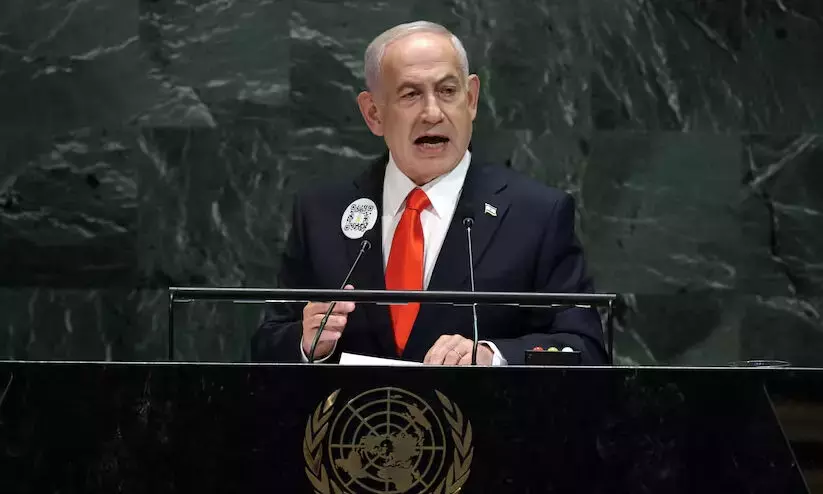
The symmetry between the Zionists and the Hindutva forces is worth noting. The former wages genocidal war against the Palestinians for securing the so-called promised land. The latter has been working to establish a Hindu Rashtra. Therefore, both groups have become natural accomplices. That's why the New York City mayor, Zohran Mamdani, has become a bete noire in the eyes of both Zionists and the BJP, because he called Netanyahu a war criminal and questioned the exclusiveness of Hindutva politics.
However, the cockroach uprising in India last May survived that narrative, and the ruling dispensation had to bow down. At the same time, Zionism is much deeper and powerful, and a single motion by a political party won't be strong enough to shake the foundations of ethnic chauvinism.