














Bihar elections 2025: AIMIM pressures Mahagathbandhan over Muslim representation
text_fields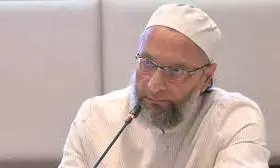

As the 2025 Bihar Assembly elections approach, a fresh debate has emerged over representation within the Mahagathbandhan alliance.
Despite Muslims making up nearly 18% of the state’s electorate, the coalition has not nominated a Muslim leader for any key post, including the Deputy Chief Minister position. This has opened a political front for Asaduddin Owaisi’s All India Majlis-e-Ittehadul Muslimeen (AIMIM) to question the alliance’s commitment to inclusivity.
The AIMIM is contesting 32 constituencies, focusing on the Seemanchal and Mithilanchal regions, known for cultural diversity and a significant Muslim population. The party had made gains in 2020, winning five seats in Seemanchal, highlighting its growing influence among Muslim voters.
The Mahagathbandhan’s choice of Mukesh Sahani, from the Nishad-Mallah-Sahani community (about 9% of Bihar’s electorate), as its Deputy Chief Ministerial face has intensified scrutiny. Observers argue that while the alliance seeks to represent a broad social coalition, sidelining Muslim leadership risks alienating a core constituency that has traditionally supported secular parties like RJD and Congress.
Owaisi’s campaign raises questions about his strategy — whether he aims to split the Muslim vote or compel the alliance to address what he calls an “exclusionary oversight.”
Analysts suggest that Owaisi’s critique serves a dual purpose: presenting AIMIM as a voice for Muslim political aspirations and pressuring the Mahagathbandhan to acknowledge underrepresentation. By emphasising representation, the party taps into a sentiment among Bihar’s Muslim electorate of being politically significant but symbolically sidelined.
Despite AIMIM’s assertive stance, RJD leader Tejashwi Yadav remains confident. In 2020, though AIMIM won five seats, four MLAs defected to the RJD, exposing weaknesses in Owaisi’s organisational reach.
Additionally, AIMIM’s influence has largely been confined to Muslim-majority constituencies, rather than mixed-population areas — a trend consistent with American political scientist Harry Blair’s observation that Muslim voters in Bihar prefer secular alliances in mixed constituencies. For Yadav, AIMIM’s presence does not pose a statewide challenge but underscores the need for careful coalition-building and engagement with minority communities.
Mahagathbandhan leaders have also accused AIMIM of acting as the “BJP’s B-Team”, suggesting that splitting the Muslim vote benefits the ruling party by weakening the secular front.
Critics argue that polarisation between Hindu and Muslim voters ultimately reinforces the BJP’s majoritarian narrative.
As the elections draw near, the question of representation remains central.
AIMIM’s rise highlights the unease among Muslim voters who feel underrepresented despite their numerical strength.
The Mahagathbandhan faces the challenge of aligning social arithmetic with political symbolism. Leadership decisions in the coming months will be crucial in maintaining its image as an inclusive alliance.