










Amartya Sen warns special electoral roll revision could 'disenfranchise' the poor
text_fields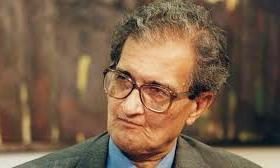

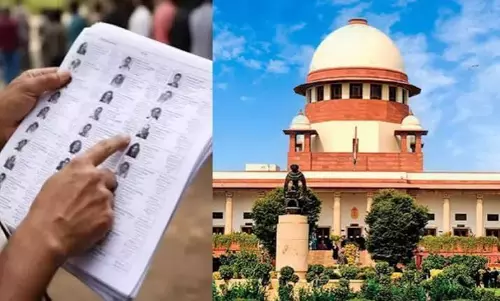
Kolkata: Nobel laureate and economist Amartya Sen has voiced serious concerns over the Election Commission’s special intensive revision (SIR) of electoral rolls, cautioning that the process, if carried out insensitively, risks stripping poor and marginalised communities of their voting rights.
Speaking to reporters on Friday, Sen said that while administrative updates and procedural checks are necessary, they must not undermine fundamental rights.
"Yes, it's true that from time to time various procedural tasks need to be carried out. However, in doing so, one cannot create a 'better system' by trampling on the rights of the poor," he said.
Sen questioned the fairness of a bureaucratic system that demands strict documentation from citizens who may not have access to it. "Many people don't have documents. Many cannot vote... If, in the name of trying to improve things a little, harm is caused to many, then that becomes a serious mistake. You cannot justify seven new mistakes just to correct one," he remarked.
The Election Commission has defended the SIR, saying it is meant to update and ensure error-free electoral rolls. However, the process has faced political and civil society criticism, especially after the removal of more than 65 lakh names from Bihar’s draft rolls during the first phase of SIR, reducing the voter list from 7.9 crore to 7.24 crore.
Sen’s warning reflects growing fears that eligible voters could be wrongly excluded without adequate safeguards, weakening the democratic process. "A just system must always protect those who are most vulnerable," he added.
The 91-year-old economist was speaking at a public discussion titled India’s Youth: Social Opportunities They Should Have, where he engaged with undergraduate and high-school students.
Beyond electoral concerns, Sen highlighted the need for India to embrace what he called yukta sadhana or "joint practice" — active cooperation between communities rather than mere tolerance.
He cited the historical contributions of Dara Shikoh, who translated fifty Upanishads into Persian, paving the way for global access to Hindu philosophy, and recalled the work of his maternal grandfather, Kshitimohan Sen, a scholar who explored Hindu-Muslim cultural collaboration in his book Bharate Hindu Musalmaner Yukta Sadhana.
"The relationship between Hindus and Muslims is not just about tolerance. It's about collaboration, something we've seen historically in music, literature, and architecture," Sen noted.
The book, long unavailable, was reissued on Friday by the Pratichi Trust with a fresh introduction by Sen, who stressed its relevance in today’s climate of social and political polarisation.