














Allahabad High Court: Places of Worship Act won’t block state land acquisition for public works
text_fields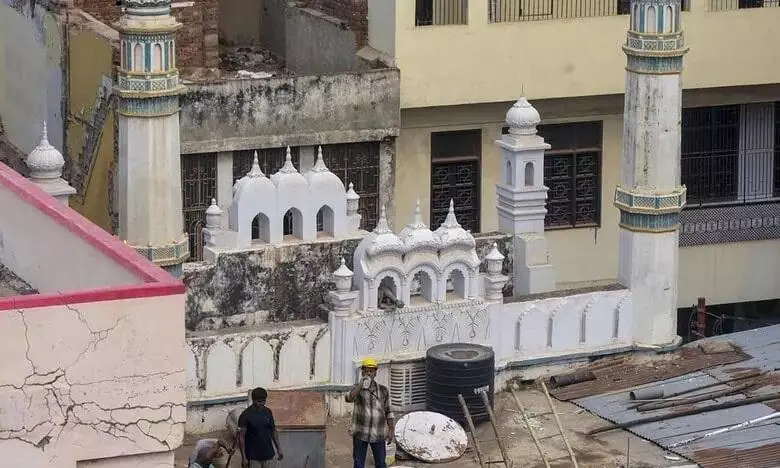

Prayagraj: The Allahabad High Court has ruled that the Places of Worship (Special Provisions) Act, 1991, which safeguards the religious character of worship sites as they stood on August 15, 1947, does not bar the state from acquiring those properties when needed for genuine public projects such as road expansion or other infrastructure works.
A division bench of Justices J.J. Munir and Arun Kumar dismissed a petition by six Muslim shopkeepers from Varanasi’s Dalmandi, who had sought to prevent the Uttar Pradesh government from acquiring six mosques — Anjuman Intezamia Masjid, Masjid Rangile Shah, Masjid Ali Raza Khan, Masjid Karimullah Baig, Masjid Nisaran and Masjid Sangamarmar — as part of a road widening plan linked to the Kashi Vishwanath Corridor.
The petitioners argued the mosques predated independence and so were immune from takeover under the 1991 law. The court disagreed, explaining that the Places of Worship Act was enacted to stop conversion of religious sites from one faith to another, not to strip the state of its statutory power to compulsorily acquire land for secular public purposes. The bench said acquisition for activities such as road development or infrastructure augmentation remains permissible.
The court also pointed to Section 51 of the Waqf Act, 1995 (as amended), which allows Waqf properties to be acquired for public needs provided consultation with the Waqf Board and other protections are observed.
The judges were critical of the petitioners’ suggestion that the proposed demolitions singled out a community, calling that claim “odd.” They noted the shopkeepers were tenants, not mutawallis (custodians) of the mosques, and therefore lacked standing to press claims to protect the religious structures on behalf of the institutions.
While deciding the case on its legal merits, the bench clarified its ruling does not preclude the state, the Waqf Board or mosque custodians from pursuing their respective remedies in future proceedings.