










15th-century stone inscriptions of Suryavanshi Gajapati Empire found
text_fields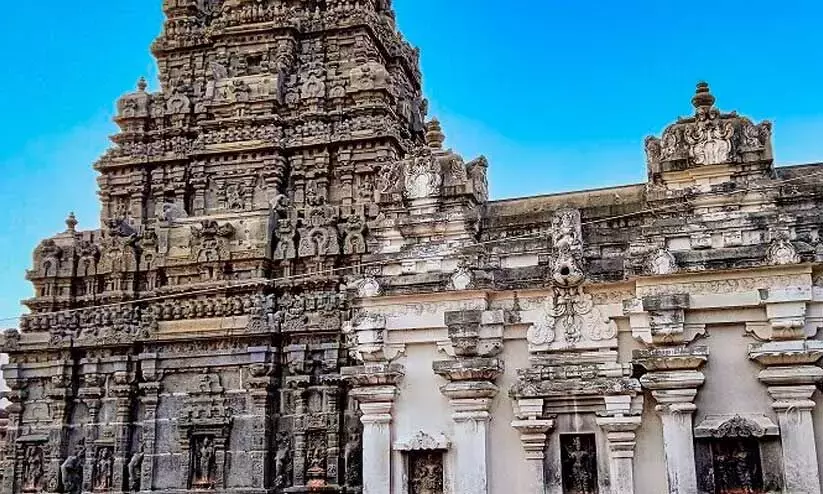
Srikurmam temple in Srikakulam.

Visakhapatnam: Odia inscriptions of Kapilendra Deva (1435-1467), the founder of the Suryavanshi Gajapati Empire, which ruled a vast empire from the Ganga in West Bengal to the Kaveri in Tamil Nadu in the 15th century, have been discovered in the Srikurmam temple in Srikakulam, Andhra Pradesh. This discovery of stone inscriptions by researcher Bishnu Mohan Adhikari paves the way for new historical facts and research. It is the first time that Odia inscriptions have been found in a temple in Andhra Pradesh. It is an ancient temple built by the Kalingas, who ruled the Eastern Ganges. These inscriptions were found on two pillars in the Shweta Pushkarini Mandapam of the temple.
This discovery will pave the way for new research into the cultural exchange between the countries that comprised Andhra at that time. Three stone inscriptions in Telugu and one in Sanskrit of Kapilendra Deva were also found. This inscription of 1455 is a renewal of the grant of land. Another inscription of 1461 relates to the gift of a bronze lamp to the temple. Earlier, another inscription was found regarding the gift of lamps by the authorities of the Kalinga temple to the king on his victory.
However, new inscriptions in the Odia language are bringing to light new discoveries of cultural traditions. One inscription in Odia is related to the offering of a sandalwood paste ritual to the god Kurmanatha. Another is related to the 34th regnal year of Kapilendra Deva.
These discoveries also shed light on the connections of the Kalinga empire to the south.