














US to be Guardian of Hormuz; reinstating blockade on Iran: Trump
text_fields

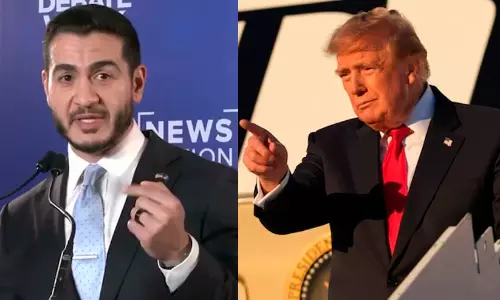
Washington: US President Donald Trump has announced that the United States will reinstate its naval blockade of Iran and assume the role of the "Guardian of the Strait of Hormuz", a move that sharply escalates tensions with Tehran and threatens to derail efforts towards a more lasting peace.
“We are reinstating the THE IRANIAN BLOCKADE, so named because it is only stopping Iran’s ships or customers from entering or leaving,” Trump wrote on Truth Social.
The announcement came after the latest exchange of attacks between the two countries. Iran said it had again targeted US military sites in Bahrain, Kuwait, Oman and Jordan, while US forces continued strikes on Iranian port cities along the country's coast.
Trump said the renewed blockade would prevent Iranian ships and vessels trading with Iran from entering or leaving. The US Navy-led Joint Maritime Information Center later announced that the blockade would come into effect at 20:00 GMT on Tuesday. Trump also proposed imposing a 20 per cent charge on all cargo transiting the Strait of Hormuz to recover the costs of providing security in the strategically important waterway.
“The U.S.A. will be, from this point forward, known as ‘THE GUARDIAN OF THE HORMUZ STRAIT,'” Trump wrote, “but as such, and as a matter of FAIRNESS, will be reimbursed, at the rate of 20% on all cargo shipped, for any and all costs necessary to do the job of providing safety and security to this very volatile section of the World. The process and formation will begin immediately.”
The proposal drew immediate opposition from the International Maritime Organization, which reiterated that international law provides no legal basis for imposing mandatory transit fees through straits used for international navigation. The announcement also contrasts with US Secretary of State Marco Rubio's June position that no country is permitted under international law to levy tolls on international waterways.
The move threatens to unravel another key provision of the initial memorandum of understanding signed last month, under which both sides had agreed to end hostilities, lift the US naval blockade and reopen the Strait of Hormuz to shipping. More contentious issues, including Iran's nuclear programme, access to frozen assets and the future administration of the strait, were to be negotiated over the following 60 days. Iran has repeatedly rejected any US role in controlling the strategic waterway, with its joint military command warning Washington and its allies against pursuing such a plan.