


















US downs four Iranian drones near Hormuz, striking radar sites amid shaky ceasefire
text_fields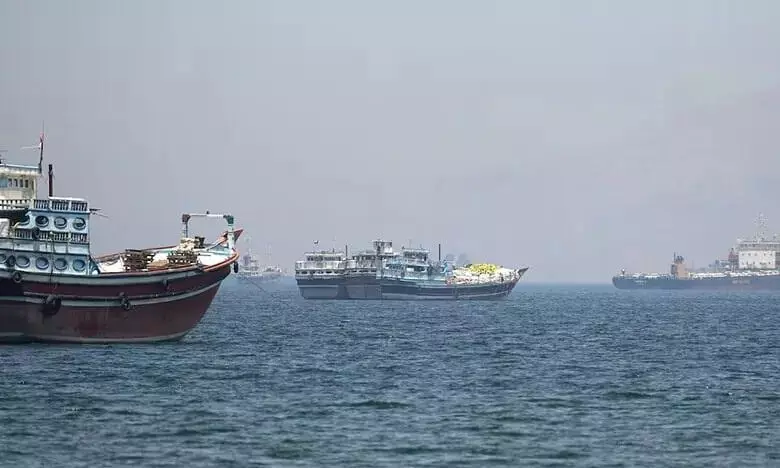

Chippewa Falls: The US military shot down four Iranian drones headed toward the Strait of Hormuz on Friday, June 5, launching retaliatory strikes against Iran's coastal surveillance radar sites. The latest escalation has pushed a fragile regional ceasefire to its limits as the Trump administration ramps up pressure on Tehran.
According to US Central Command, the intercepted drones posed an immediate threat to maritime traffic in the crucial trade corridor. In response, American forces struck several radar positions, including one situated on an island within the strait, to defend against further hostile actions.
The military confrontation comes amidst a US-enforced blockade on Iranian ports, a direct countermeasure to Tehran's ongoing chokehold on the vital international gateway for oil and natural gas. This blockading of shipments has sent global energy prices spiking, presenting a growing political challenge for President Donald Trump’s Republican Party ahead of the upcoming midterm congressional elections.
The drone interceptions follow a highly destructive attack earlier this week, when Iranian drones heavily damaged a passenger terminal at Kuwait’s main airport, killing one person, wounding dozens, and forcing a temporary closure of the airfield.
Despite the escalating violence threatening to collapse the tenuous truce, President Trump offered an optimistic assessment during an event with farmers in Wisconsin, telling reporters that the situation with Iran seems to be going quite well. He added that the US would resolve the conflict very quickly and very strongly, whether through a signed piece of paper or "the very tough way." Trump suggested that the tougher approach might ironically prove easier, promising farmers that their surging fertilizer prices would soon drop back to where they were four months ago.
The administration currently finds itself in a strategic holding pattern. While US and Iranian negotiators reached a tentative agreement a week ago to extend the current ceasefire by 60 days and revive talks on Iran's nuclear program, Trump has demanded unspecified changes. Iranian officials have yet to publicly sign off on the extension.
When asked by NBC’s "Meet the Press" why negotiations were stalling, Trump attributed the delay to Iran's pride and independence, stating they are being forced to make concessions they never thought they would make. In the same interview, Trump noted that the US military pressure had successfully degraded Iran's arsenal, claiming that the country now retains only 21 to 22 percent of its original missile capacity.
The instability surrounding Iran is further compounded by a rapidly deteriorating situation in Lebanon. While the White House recently touted a US-brokered ceasefire between Israel and the Lebanese government, the Iranian-backed militant group Hezbollah has flatly rejected the accord.
On Friday, the Israeli military struck multiple targets across southern Lebanon and issued mandatory evacuation warnings for nine villages. The bombardment killed nine people across six different locations, according to Lebanese state media. Israel’s military confirmed that two of its soldiers were wounded, one severely, during a ground encounter with militants in the region.
The ongoing war in Lebanon, where Israeli forces have seized large swaths of southern territory, remains inextricably linked to the broader conflict with Iran. Tehran has consistently demanded that any permanent maritime or regional truce in the Strait of Hormuz must formally extend to cover Lebanon as well.
Compounding its military strikes, the United States has intensified its economic warfare against Tehran. Earlier on Friday, the US military confirmed that its forces boarded a sanctioned, Iran-linked oil tanker in the Indian Ocean to prevent the Islamic Republic from profiting off illicit oil sales. Simultaneously, Washington rolled out a sweeping new round of sanctions directly targeting a network of individuals, firms, and shipping tankers tied to Iran’s energy sector.