













Trump announces ‘AI Force’, plans to appoint AI ‘Czar’
text_fields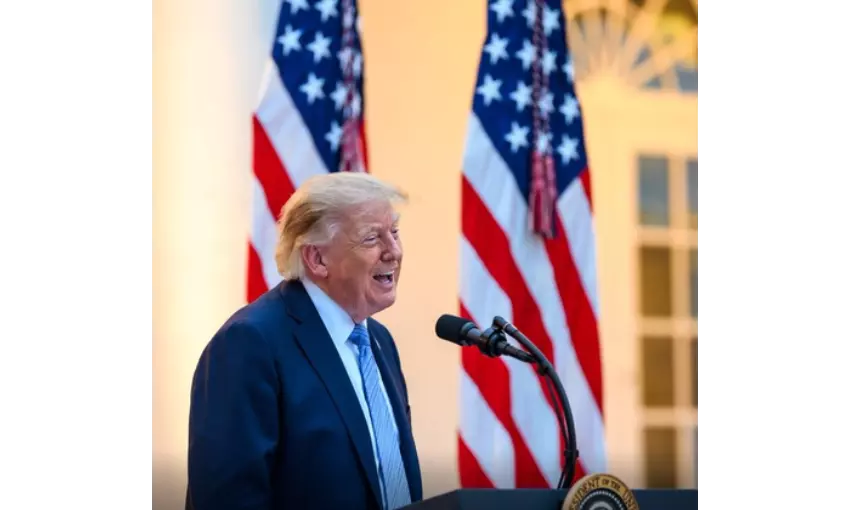

Washington: US President Donald Trump has announced plans to set up an “AI Force” and will soon name an “AI Czar” to oversee the country’s artificial intelligence push, saying his administration would support the sector’s growth while relying on existing laws to tackle misuse.
In a lengthy post on Truth Social on Saturday, Trump described AI as the next Industrial Revolution and said it could eventually account for as much as 25 per cent of US gross domestic product. He said the government would not “hinder or stifle” the industry, but would “cherish it, help it, and watch over it” even as it looked out for “BAD” actors using the existing criminal and civil justice system.
Trump did not give details on the structure of the proposed AI Force or the powers and responsibilities of the AI Czar, and offered no timeline for the appointment. He likened the new body to the US Space Force created during his first term, writing: “For this purpose, I am forming the AI Force, much like I did Space Force, which has been a tremendous SUCCESS… To that end, I will be announcing, in the near future, the AI ‘Czar’ — Only High I.Q. individuals need apply!”
The announcement comes amid intensifying debate in Washington over how fast to advance AI and whether new guardrails are needed, with some industry leaders warning of national security and safety risks. Trump dismissed concerns about AI’s potential dangers as part of a Democratic “hoax”, grouping them with claims about the Russia-Ukraine war and global warming that he said were “destroying” the United States.
Earlier this week, US Attorney General Todd Blanche told reporters at the White House that America could not afford to lose the AI race to China and pledged action against Chinese individuals and companies that steal from US tech firms. Blanche called AI “highly beneficial” and rejected calls for the Justice Department to act as a technology regulator or slow its development, saying the department would investigate criminal conduct linked to AI but would not assume a broader regulatory role.
Blanche’s remarks followed questions about warnings from technology leaders that rapidly advancing AI systems could pose serious national security and other risks, but he framed much of the safety debate as political posturing ahead of the midterms.
(Inputs from IANS)