


Putin reaffirms India as key energy partner despite US sanctions
text_fields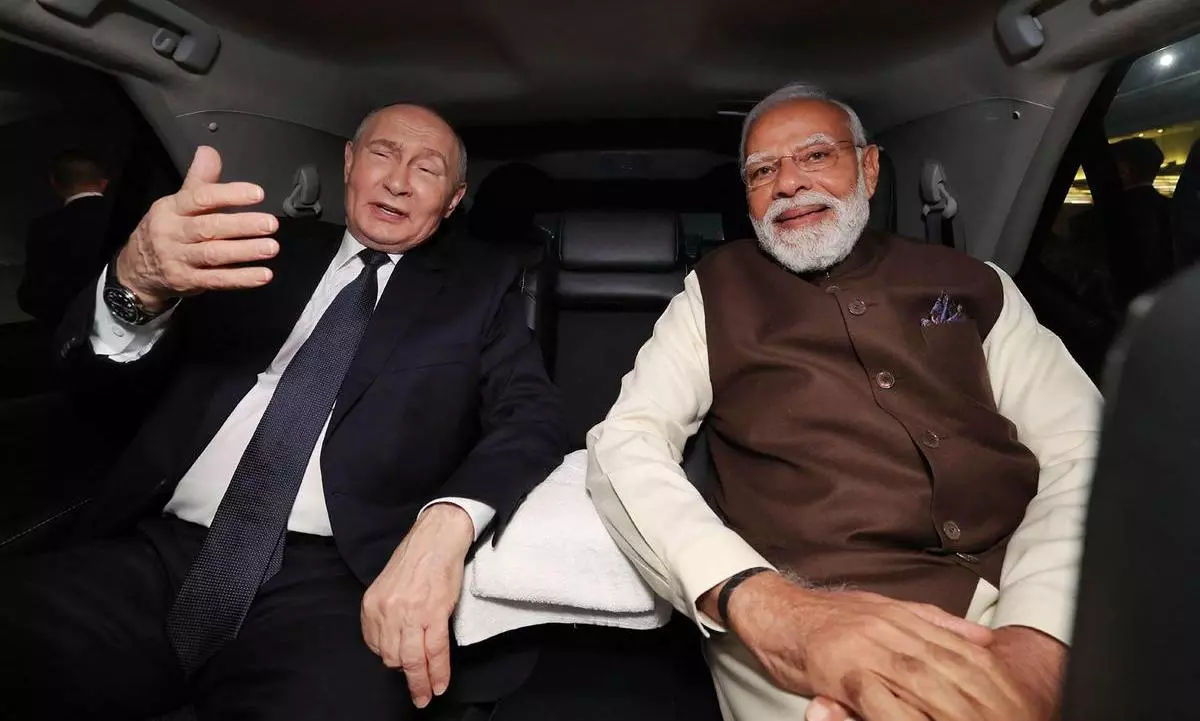

New Delhi: Russian President Vladimir Putin, during his visit to New Delhi from December 3 to 5, 2025, reassured India that energy cooperation remains a top priority for Moscow, according to a report by India Narrative.
Standing alongside Indian officials, Putin stated that Russia is committed to providing “uninterrupted shipments” of fuel to India and described Indian partners as “very reliable.” His message comes at a critical juncture, with India’s imports of Russian crude reaching a five-month high, even after the US imposed new secondary sanctions on November 21.
India’s reliance on Russian oil has increased sharply since 2022, with refiners showing reluctance to cut back despite mounting challenges. Nayara Energy remains one of the biggest buyers, sourcing more than half of its total crude intake from Russia between 2023 and 2025. In some months of 2024, nearly 60 per cent of the crude processed at its Vadinar refinery came from Russian grades such as Urals and ESPO.
However, maintaining the flow of Russian crude is becoming increasingly difficult. Many Western insurance providers have withdrawn coverage for vessels associated with the “dark fleet,” pushing up shipping costs. Freight rates on the Russia–India route have risen by nearly 20 per cent compared with mid-2025, and maritime brokers report that almost 40 per cent of previously used tankers are now considered high-risk or uninsurable, forcing refiners to rely on unfamiliar carriers and more complex shipping routes.
Payment systems are also adapting. With tightening US regulations, Indian buyers are increasingly turning to dirham- and yuan-based settlement channels. While effective, these channels carry compliance and currency-stability risks.

Analysts point out that US sanctions do not ban Russian crude outright, targeting only specific entities. As a result, refiners are adjusting their methods rather than cutting ties entirely. Practices such as ship-to-ship transfers, mixed cargoes, and re-documentation through hubs like Fujairah, Malaysia, and certain Turkish ports are being used to transport Russian oil to India without direct links to sanctioned exporters. These measures mirror previous global examples where sanctioned oil continued reaching buyers through opaque but reliable channels.
Indian refiners continue to prefer Russian crude largely due to price advantages, as Russian barrels remain $4–7 per barrel cheaper than comparable Middle Eastern grades.
Putin’s visit has reaffirmed Moscow’s commitment to sustaining its energy partnership with India, the report noted.
With IANS inputs