














Pakistan pushes for new South Asian bloc without India, Analysts say plan unlikely to succeed
text_fields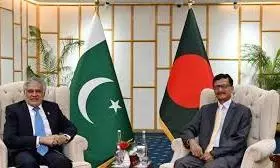

Pakistan is seeking to reshape regional cooperation in South Asia with a new grouping that excludes India, but analysts say the plan is unlikely to work given New Delhi’s economic and political influence.
Pakistan Deputy Prime Minister and Foreign Minister Ishaq Dar said last week that Islamabad wants to expand its trilateral initiative with Bangladesh and China. He suggested that the mechanism could include more regional nations and even replace the largely inactive South Asian Association for Regional Cooperation. SAARC has been dormant for years due to India-Pakistan tensions.
Dar said South Asia could not remain stuck in political divisions and a dysfunctional regional structure. He argued that Pakistan wants open and inclusive regionalism and hopes to promote cooperation, peaceful dispute resolution, and economic synergy. He said Pakistan, Bangladesh, and China held their first trilateral meeting in Kunming earlier this year and that this model can be expanded.
SAARC was formed in 1985 with India, Pakistan, Bangladesh, Bhutan, the Maldives, Nepal, and Sri Lanka as founding members. Afghanistan joined in 2007. The bloc has not held a summit since 2014. The 2016 meeting in Islamabad collapsed after the Uri terror attack. India has since preferred working with BIMSTEC, which does not include Pakistan.
South Asia has more than two billion people, but very low regional trade. World Bank data shows that intra-regional trade stands at only 23 billion dollars, around 5 percent of the region’s total commerce. The bank says this could reach 67 billion dollars if barriers were reduced.
Analysts, however, say Pakistan’s new idea is unlikely to take off.
Rabia Akhtar of the University of Lahore said the plan is more aspirational than operational. She said its success will depend on whether countries see value in small issue-based groupings and whether joining such a bloc would create political risks with India.
This is not Pakistan’s first attempt to build a new regional framework with China. A similar idea surfaced in June. At the time, experts pointed out India’s dominant position in South Asia. New Delhi’s population far exceeds Pakistan’s, and its economy, defence budget, and foreign exchange reserves are much larger.
New Delhi-based scholars say smaller neighbours rely heavily on India for trade routes and crisis support. They pointed to India’s role in disaster response and vaccine supplies during the COVID-19 pandemic. They warn that excluding India from any new forum will weaken regional cooperation and leave the space open for external powers.
Analysts say India’s participation remains essential for a balanced regional order, especially as China’s influence grows.