

















How Google and Amazon aided Israel’s genocidal assault on Gaza through a hefty pact
text_fields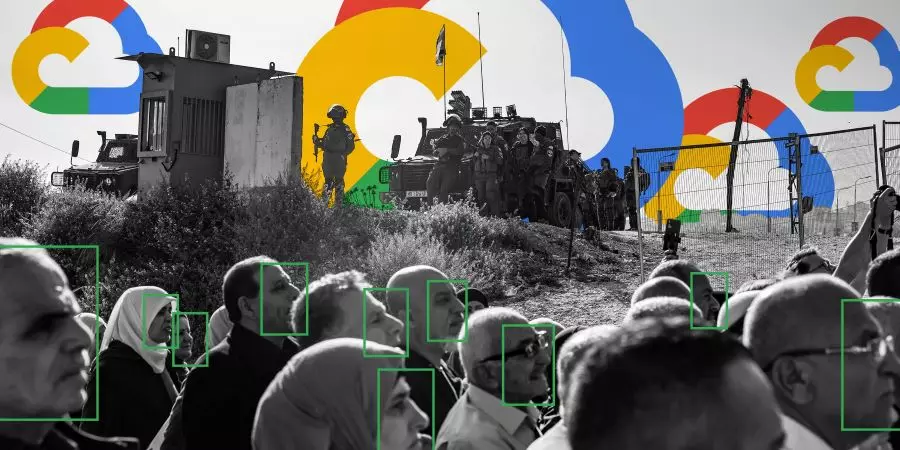

Google and Amazon had secretly assisted Israel in carrying out atrocities that amounted to genocide in Gaza, as revealed by an investigation jointly compiled by +972 Magazine, Local Call, and The Guardian, and their partnership had enabled the state to develop a vast surveillance network in the occupied territories through advanced cloud computing and artificial intelligence tools.
The two tech giants had entered into a hefty $1.2 billion pact with the Israeli government in 2021, allowing the transfer and storage of extensive volumes of state and military data on their servers, and the deal had granted Israel unrestricted authority to use the technology as it wished, even in cases where legal disputes might arise abroad.
Known as Project Nimbus, the contract had required both companies to ensure that Israel’s data remained concealed from foreign courts, thereby shielding it from accountability while making the corporations complicit in the continuing assault on Palestinians.
Running for an initial period of seven years with the possibility of renewal, the agreement had been designed to strengthen Israel’s digital infrastructure by transferring data from its government agencies, security services, and military departments onto Google Cloud and Amazon Web Services, and it had included provisions that effectively overrode the companies’ own policies and ethical guidelines.
Leaked documents from Israel’s Finance Ministry showed that the deal contained extraordinary clauses prohibiting Google and Amazon from restricting how Israel used their systems, even if such use violated international law or the firms’ own acceptable use standards.
Among the most striking revelations was a secret “winking mechanism” devised to alert Israel whenever a foreign court ordered access to its data, and rather than communicating openly, the companies were to send coded payments to the Israeli government corresponding to the dialling codes of the countries involved, thus evading legal gag orders.
When such signalling was deemed impossible, a fallback provision required a lump-sum payment to Israel, guaranteeing that it would still be informed in some form. This arrangement, experts warned, placed the companies in potential conflict with U.S. law, since compliance with Israeli demands could mean defying a lawful order from an American court.
The contract further barred the tech firms from cutting off or limiting services to Israel under any circumstances, whether in response to international condemnation, internal employee dissent, or corporate policy revisions prompted by human rights concerns, and violations of this clause would incur severe financial penalties.
Consequently, the deal subordinated both companies’ ethical and legal responsibilities to the political demands of the Israeli state, allowing it to store, process, and generate data freely within the cloud infrastructure.
Israeli intelligence and defence units later relied heavily on the systems established under Project Nimbus, and the same infrastructure was employed during Israel’s extensive military operations in Gaza, where its actions were described by human rights organisations and a United Nations commission of inquiry as genocidal.
By accepting Israel’s terms and relinquishing control over how their technology was applied, Google and Amazon became deeply implicated in a digital architecture that enabled war crimes, and their role under Project Nimbus stands as a defining example of how corporate power can be harnessed to sustain state-led oppression.