
















Supreme Court: Government's sedition review pledge doesn't tie Parliament's hands
text_fields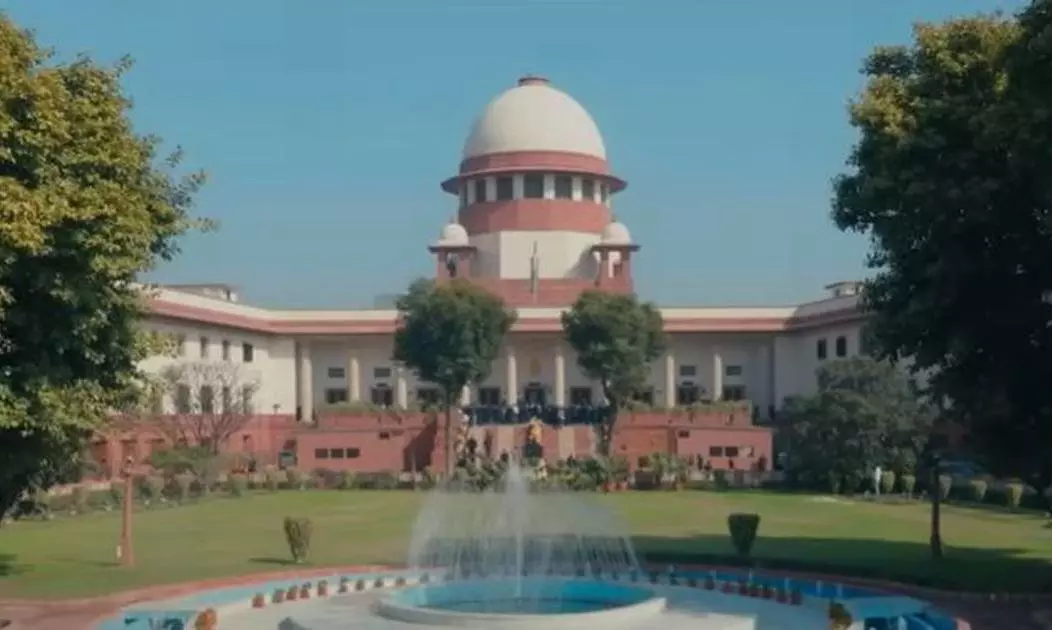

India's top court remarked Friday that the Union government's earlier commitment to revisit the sedition offense under the old Indian Penal Code does not restrict Parliament from incorporating it into the Bharatiya Nyaya Sanhita.
A bench led by Chief Justice Surya Kant alongside Justice Joymalya Bagchi stressed the separation between executive promises and legislative authority. The observation arose while hearing public interest litigations targeting multiple clauses in the new criminal code, particularly Section 152.
This provision targets actions threatening India's sovereignty, unity, and integrity. It penalizes a broad range of speech or conduct, such as deliberately using words to incite secession, armed rebellion, or subversive acts.
Petitioners argue Section 152 revives the outdated sedition law from IPC Section 124A, repackaged during the Bharatiya Nyaya Sanhita's rollout in July 2024.
The challenges invoked a May 2022 assurance from the Centre to the Supreme Court promising a review of IPC Section 124A. Back then, the court had paused all sedition FIRs and trials pending that review.
Senior advocate Menaka Guruswamy, for one petitioner, pointed out the government's prior vow to scrap sedition entirely. “And yet it is present in the form of Section 152 BNS,” she noted, per Hindustan Times.
Guruswamy contended the executive could not pledge changes in court only to reinstate the offense elsewhere, as reported by Live Law.
The bench rejected this view outright. “Parliament is not bound by the government’s undertaking,” it stated, calling such pledges executive matters. “The legislature may still want to enact a law. Parliament is absolutely entitled to pass any law.”
Judges clarified that while lawmakers hold unchecked power to legislate, courts step in for constitutional scrutiny. “It is only when courts subject a law to judicial review, we examine whether a provision satisfies the constitutional requirements,” they explained.
The court expressed satisfaction with the Bharatiya Nyaya Sanhita's rollout so far. “It is only with passage of time, we come to know which are the provisions that are causing impediments and if so, whether they can be resolved by courts or need legislative intervention,” it observed.
Hearings resume in March.