












Global universities cut ties with Israeli academia over Gaza war complicity
text_fields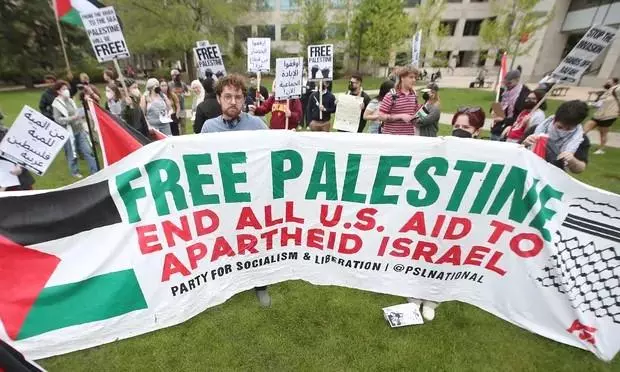

A growing number of universities, academic institutions, and scholarly organisations worldwide are severing links with Israeli academia, as accusations mount that it is complicit in government policies towards Palestinians and entangled with the country’s military and security apparatus.
According to Gaza’s health ministry, more than 63,000 people have been killed in the enclave, most of them civilians, while UN-backed experts have confirmed a “man-made” famine in areas devastated by bombardment.
Several universities in Brazil, Norway, Belgium, Spain and Ireland have cancelled collaborations, with the University of Amsterdam ending a student exchange programme with the Hebrew University of Jerusalem, while the European Association of Social Anthropologists has declared a halt to institutional cooperation, The Guardian reported.
While bodies in the UK, France and Germany have largely resisted endorsing academic boycotts, with umbrella organisations stressing the importance of academic freedom, the pressure is growing from students, faculty members and independent researchers.
In Britain, many academics are choosing to avoid joint projects with Israeli colleagues even in the absence of official policies, while campaigners argue that Israeli universities bear structural responsibility for enabling state violence.
Some Israeli academics insist that the measures do not affect their research or long-standing collaborations, yet critics dispute the extent of internal dissent, noting that very few scholars openly challenge government policies or refuse military service. Analysts describe the boycott as a harsh but necessary intervention intended to remind Israeli academia of its role within an oppressive system.
Concerns extend beyond reputational damage, since Israel’s economy relies heavily on research and technological innovation, and the potential restriction of European Union funding poses a significant threat. Since 2021, Israel has received hundreds of millions of euros from the EU’s Horizon Europe programme, but the European Commission has proposed a partial suspension of Israel’s participation in projects linked to sensitive technologies such as drones and artificial intelligence.
Israel has allocated new resources to counter the Palestinian-led academic boycott, but the country’s share of European research funding is already shrinking, and the number of early-career researchers awarded EU grants has dropped.
Observers warn that prolonged disruption could trigger an academic “brain drain” as scientists and medical professionals leave the country, raising doubts about Israel’s long-term capacity to sustain its research-driven economy.