


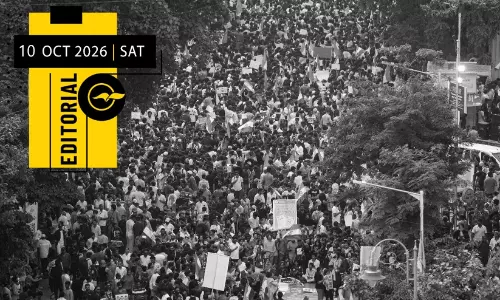



Bangladesh faces Islamist unrest as Salafist groups unite
text_fields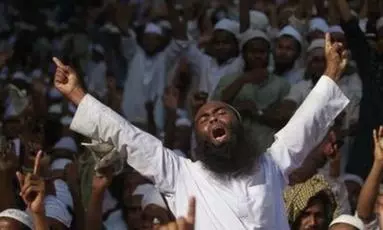

New Delhi: Bangladesh is witnessing a surge in Islamist mobilisation, with several hardline groups joining forces to demand stricter religious laws, raising fears of an orchestrated coup.
Tensions escalated after the interim government led by Muhammad Yunus reversed its decision to recruit music and physical education teachers in government primary schools, moves deemed “un-Islamic” by protesting Salafist factions.
Officials say Yunus’s decision to lift the ban on Jamaat-e-Islami has backfired, emboldening the group and its affiliates. Jamaat, widely believed to be under the influence of Pakistan’s ISI, is now being supported by radical organisations such as Hefazat-e-Islam, which are pushing for the imposition of hardline Islamic laws.
Since the ousting of Sheikh Hasina, Bangladesh has plunged into instability. Islamist groups have gained significant control, allegedly with ISI backing. The interim government’s outreach to Pakistan, including relaxed visa norms and maritime access, has further fuelled concerns.
Observers warn of an Islamist counter-revolution underway, with parallels drawn to the August 2024 coup. Intelligence sources describe the current unrest as a calculated effort, not a spontaneous uprising.
The ISI is reportedly coordinating with groups like Hefazat and Jamaat to undermine democracy in Bangladesh. Simultaneously, terror outfits such as Harkat-ul-Jihadi Islami (HuJI) and Jamaat-ul-Mujahideen Bangladesh (JuMB) have been tasked with planning attacks in India, aiming to destabilise the region.
Minority communities in Bangladesh have come under attack, with temples targeted in coordinated assaults. Social media platforms have been flooded with extremist content, including calls for Sharia law and threats of violence modelled on Islamic State and Hamas tactics.
Indian intelligence agencies believe that following Hasina’s departure, the ISI swiftly facilitated collaboration between Salafist groups in Bangladesh and Pakistan. The ultimate goal, officials say, is to establish a theocratic regime led by a supreme leader, akin to Iran’s model.
Reports indicate that over 8,000 youths are being trained to form an Islamic Revolutionary Army (IRA), mirroring Iran’s Islamic Revolutionary Guard Corps (IRGC).
Indian agencies stress that restoring stability in Bangladesh will require more than elections, it demands curbing external interference, particularly from Pakistan.
(Inputs from IANS)