














'A toilet of our own a luxury': pained voice from tend-bound Gaza
text_fields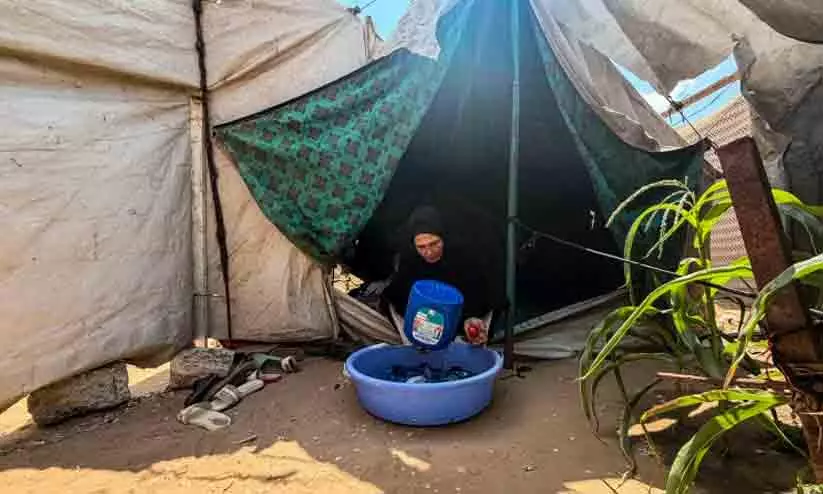

Gaza: For hundreds of thousands of Palestinians displaced by Israel’s military offensive, finding a safe place to sleep is only part of the daily struggle. With homes destroyed and families forced into tents or the ruins of buildings, the lack of basic sanitation has become another devastating feature of life in Gaza.
Since the war began in October 2023, Eman Mahmoud Shamia and her family have been displaced several times and now live in a tent. A makeshift communal toilet dug into the ground by residents offers little relief, particularly for women and children facing safety concerns. Her husband, who has lung cancer, is unable to use the facility, adding to the family’s ordeal.
The sanitation crisis has been intensified by severe shortages of hygiene and plumbing supplies amid restrictions on goods entering Gaza. A used toilet seat reportedly costs between 1,500 and 2,000 shekels, putting even basic sanitation beyond the reach of many families. Some have resorted to cutting holes in plastic chairs and placing sand underneath to create makeshift toilets.
With around 20 to 25 people sharing a single communal toilet in some areas, the absence of separate facilities for men and women has created serious health and security concerns. Toilet paper and hand sanitiser have also become luxuries.
The United Nations estimates that basic sanitation remains inaccessible to a large share of Gaza’s population. Wastewater and human waste accumulating near shelters are worsening the spread of infections, skin diseases and diarrhoea, particularly among children, women and elderly people.
Humanitarian groups including UNICEF, the World Food Programme and the European Union are being urged to urgently deliver sanitation supplies and help address the deepening crisis.