


















Supercomputer creates one of the most realistic virtual mouse brains ever built
text_fields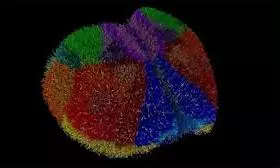

Scientists have created one of the most detailed virtual models of a mouse brain, marking a major step forward in understanding how the brain functions and how diseases like Alzheimer’s develop.
The project was carried out by researchers at the Allen Institute in the United States and the University of Electro-Communications in Japan.
The team successfully simulated the entire mouse cortex, the region responsible for processing information. While a mouse brain is smaller and less complex than a human brain, the two share key structural similarities, making the model a valuable tool for future research.
The virtual brain contains 9 million neurons and 26 billion synapses connected across 86 regions. The simulation runs on a supercomputer capable of performing quadrillions of calculations per second, allowing scientists to observe brain activity with unprecedented detail.
For perspective, a real mouse brain has around 70 million neurons inside a space about the size of an almond. Researchers say that the virtual model will allow controlled experiments that are impossible to conduct on living animals and may lead to deeper insights into neurological disorders.
Anton Arkhipov, a computational neuroscientist at the Allen Institute, said the achievement proves that advanced brain simulations are now feasible. He said the new model is a technical milestone that gives researchers confidence that much larger and more precise simulations can be built in the future.
The work was presented at the SC25 supercomputing conference, and the findings have been published online.