












ISRO set to launch NVS-03 tonight to strengthen India’s NavIC navigation network
text_fields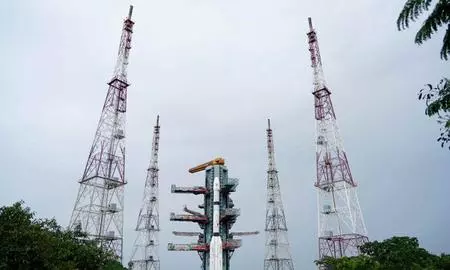

New Delhi: The Indian Space Research Organisation (ISRO) is scheduled to launch its navigation satellite NVS-03 aboard the GSLV-F18 rocket at 11:51 p.m. IST on Friday, October 30, from the Satish Dhawan Space Centre in Sriharikota, Andhra Pradesh. The mission will place the satellite into a Geosynchronous Transfer Orbit from the spaceport’s Second Launch Pad.
NVS-03 is the third satellite in ISRO’s second-generation Navigation with Indian Constellation (NavIC) series. It is intended to replenish and reinforce India’s independent regional navigation system, which provides positioning, velocity and timing services across India and an area extending about 1,500 km beyond the country’s landmass.
The satellite carries both an indigenous atomic clock and procured atomic clocks, which are essential for precise navigation and timing. It will also add the L1 navigation signal to the existing L5 and S-band signals, improving compatibility with a wider range of user devices.
GSLV-F18 marks the 20th flight of India’s Geosynchronous Satellite Launch Vehicle. After deploying NVS-03 into a transfer orbit, the satellite’s onboard propulsion system will be required to move it into its operational geostationary orbit, roughly 37,000 km above Earth.
NavIC supports applications such as transportation, maritime navigation, location-based services, and other activities that require reliable positioning and timing. The system offers a Standard Positioning Service for civilian users and an encrypted Restricted Service for authorised users.
ISRO plans a total of five second-generation navigation satellites to modernise the constellation and ensure continuity of services. NVS-01, the first in the series, was launched on May 29, 2023, and was the first Indian navigation satellite to fly an indigenous atomic clock.
The launch is being closely watched because it is expected to increase the number of operational NavIC navigation satellites in orbit, strengthening India’s self-reliant navigation capability.
(Inputs from IANS)