











Trump's gimmicks and the future of Palestine
text_fields

The world had breathed a sigh of relief, hoping for at least a temporary end to the civilian genocide affecting tens of thousands of women and children, when the first phase of the ceasefire in the Hamas–Israel war—which began on October 7, 2023—came into effect on October 10, 2025. In this initial stage of the ceasefire, initiated by U.S. President Donald Trump, hostages and prisoners were exchanged, and the Israeli military withdrew from half of the Gaza Strip. However, in total violation of the terms of the agreement, Israel has since killed 451 Palestinians and seriously injured 1,251 others. According to the agreement, 54,000 trucks carrying essential supplies were supposed to be allowed into the completely devastated Gaza Strip by January 10; however, only 23,019 trucks—a mere 43 per cent of the permitted quota—were let in to address the hunger, thirst, and urgent medical needs of approximately 2.1 million people. Instead of nutritious meat, vegetables, or dairy products, Israeli forces permitted only chocolates, snacks, and beverages to sustain the lives of those pushed to the brink of death by starvation. For the residents of Gaza, who are endlessly dragging out their lives between survival and death, hope now rests on the second phase of the ceasefire, which has already commenced.
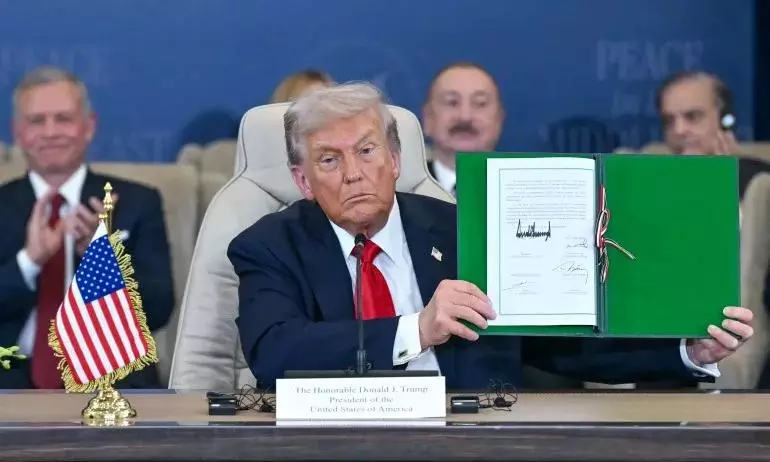
According to Trump’s plan, a peace committee he is assembling under the name “Board of Peace”—thereby completely sidelining the United Nations—is to oversee the administration of Gaza. To supervise this, he has appointed seven individuals, including his son-in-law Jared Kushner, U.S. Secretary of State Marco Rubio, Trump’s special envoy Steve Witkoff, and former British Prime Minister Tony Blair, who loyally stood with the United States during the total destruction of Iraq. Furthermore, Trump has requested that sixty countries join as members of the Board. Notably, most of these nations either are aligned with the American–Israeli position or lack the courage to offend them. Trump has also demanded a fee of $1 billion from those who wish to remain on the peace committee for more than three years. Meanwhile, Israeli Prime Minister Benjamin Netanyahu opposes the inclusion of Turkey and Qatar in the peace committee, perceiving them to be aligned with Hamas.
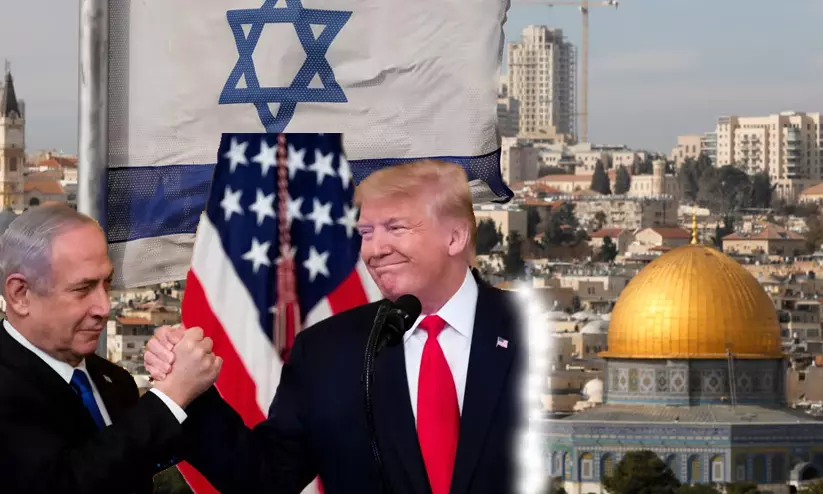
Information suggests that although India is among those invited, Prime Minister Narendra Modi remains hesitant to make a decisive move. Given that the international community has entrusted the United Nations with the mandate to confront and resolve such crises, India is reportedly undecided on how far it can support Trump, who appears to be assuming the role of a “global emperor” while completely sidelining the UN. Furthermore, it is a cause of concern for India how it can accept a Trump plan that denies the very existence of an independent Palestine, especially since India has consistently supported a two-state solution until now. Pakistan is also among those invited by Trump, and it is unlikely that Pakistan will decline the invitation. India cannot ignore the potential friction that may arise from participating in an international committee alongside Pakistan. Ultimately, it is probable that the promise of tariff concessions may compel the Modi government to accept Trump’s invitation. In the proposed governing body, Dr Ali Shaath, who was identified by Trump to lead the reconstruction of Gaza is the sole Palestinian. While the United States proceeds with these arrangements, the Rafah checkpoint on the Egyptian border—which Israel was supposed to open under the agreement—remains closed. Netanyahu’s justification is that the body of one more person taken hostage by Hamas earlier has yet to be returned. Hamas’s helplessness—their inability to locate a body lying buried somewhere beneath the thousands of buildings destroyed by Israeli bombers—is being used by Israel as a pretext to keep the vital Rafah border shut.
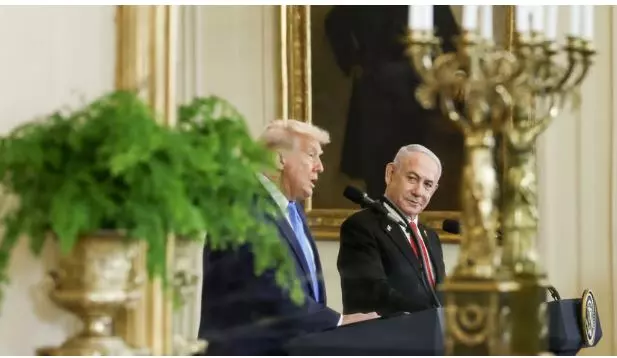
In short, it must be assumed that a purely humanitarian solution to the Palestinian issue is not likely to emerge anytime soon. Nevertheless, it is futile for the Trump–Netanyahu team to ignore the fact that peace in the Middle East is impossible as long as the sovereign state—the birthright of the Palestinian people—does not become a reality. Even if their own allies defect due to various self-interests, history encourages the belief that a people with self-respect will continue their struggle.