


















Jalebi, the Magh Mela, and India’s living republic
text_fields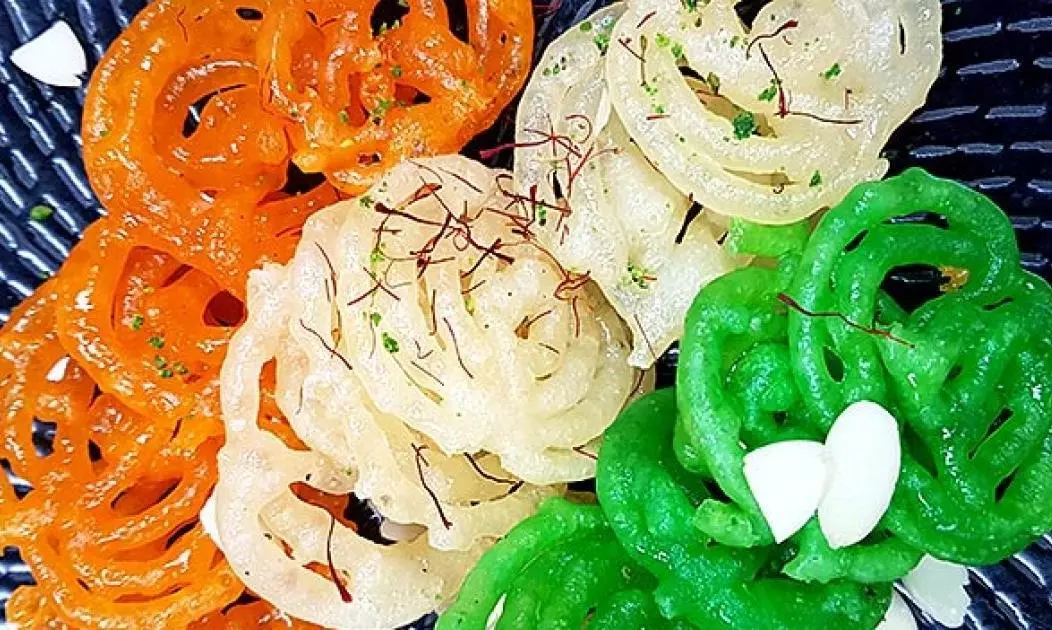

Why common people, not power, carry the civilisational legacy of faith and plurality
The 77th Republic Day coincided with the 45-day Magh Mela at the sacred confluence of the Ganga, Yamuna and the mythical Saraswati in Prayagraj.
Ironically, the two great events—one rooted in the constitutional identity of India, the other in the religio-cultural legacy of Bharat Varsh—left the Mahant of the Gorakhnath shrine and Uttar Pradesh Chief Minister, Yogi Adityanath, and the Joshimath Peeth Shankaracharya, Swami Avimukteshwaranand Saraswati, locked in a public confrontation that ended up diminishing both the Republic of India and the legacy of the 8th-century seer Adi Shankaracharya.
The minions of the Yogi-led administration allegedly obstructed the passage of the religiously adorned chariot carrying Swami Avimukteshwaranand to the ritual bathing at the Sangam. The episode infuriated the Shankaracharya, with Adityanath pitting the police apparatus against him.
A magistrate resigned, citing what he perceived as the humiliation of the Shankaracharya. Subsequently, another magistrate resigned, openly expressing his loyalty to Adityanath. The murky drama that unfolded in the aftermath of this unseemly episode eclipsed something far more benign and beautiful—the culinary tradition surrounding the luscious sweetmeat jalebi, a beloved staple of both the Magh Mela and Republic Day.
Journey of Jalebi
The crispy, piping-hot jalebi, which traces its origins to the Arabian and Persian deserts, is treated as a de facto “national sweet” in the Hindi heartland. Independence Day and Republic Day invariably witness people making a beeline for jalebi, vended from modest kiosks and wheeled carts, particularly in Purvanchal, encompassing large parts of Uttar Pradesh and Bihar.
Likewise, whether it is the Magh Mela at Prayagraj, the Asia-famous Harihar Kshetra Mela at Sonepur in Bihar, or any other religious-cultural fair, the orange coils of freshly fried jalebi remain the most sought-after indulgence. Be it the month-long Ramadan, Eid, or myriad Hindu festivals, jalebi—fried in edible oil and soaked in molten sugar or jaggery—enhances the collective mood of celebration during Eid, Diwali and Holi alike.
In a sense, jalebi—its makers, vendors and consumers, especially children and common folk—has been the true mainstay of cultural congregations in the Indian subcontinent for centuries. No mela or festival feels complete without it. The metaphysical philosophies of Vedanta, Islam, Buddhism, and the traditions of gyan, bhakti and karma provide the scaffolding for saints, seers and philosophers to engage in contemplation and academic discourse. Yet it is the crowd around the jalebi stall that keeps the tamasha alive. When the tamasha disappears, philosophy risks losing its living context.
Indeed, the journey of jalebi from the Arabian and Persian deserts to India over five centuries during the medieval period encapsulates a quiet yet enchanting story of the merging of culinary traditions at the level of ordinary people across South and West Asia. Jalebi stands as an authentic testimony to syncretism, joyful coexistence, and the everyday acceptance of diversity across faiths, cultures and races.
Jalebi was not invented in the kitchen of a home or a royal court. Its origins lie in the Arabic zalabiya or zulabiya, with folklore suggesting it was the result of a happy accident. According to well-documented 10th-century Arabic culinary texts, the syrup-soaked delicacy emerged during the Abbasid Caliphate, turning an unintended mishap into a timeless sweet that continues to bind communities through shared pleasure.
Though the precise tale varies, common lore speaks of a camel-riding trader, observing the Ramadan fast, attempting to prepare a simple bread or fritter to break his fast. Accidentally, he ended up with a batter that was far too thin. Clueless about how to salvage it, he left the mixture aside for a while, allowing it to ferment.
Still determined to make something edible out of the runny dough, the fasting trader poured it into hot oil. The liquid batter, unable to hold a shape, turned into tangled, spiralling threads. In an effort to rescue this unintended creation, he dipped the fried coils into honey and rosewater. The result was surprisingly delicious. Fellow roza-observing traders named it zalabiya or zulabiya and relished it to their heart’s content.
The delicacy travelled to the Indian subcontinent from around the 10th century onwards, carried by Persian-speaking Turk traders, invaders, Sufis, mystics and travellers. So irresistible was the sweet that Indians embraced it, renamed it jalebi, and made it their own. Folklore within India also suggests that people celebrated Lord Rama’s return to Ayodhya from exile by lighting diyas, preparing shashkuli—a forerunner of jalebi—and sharing it in collective joy.
Jalebi is not associated with any particular caste or class. Rather, common agriculturists and working people have traditionally used melas and festive occasions to set up carts, prepare jalebi on the spot, and sell it to revellers, earning a little extra income while adding sweetness to public life.
Today, media outlets are saturated with cacophonous debates on the war of words between Adityanath and Avimukteshwaranand. Yet this column wonders about the fate of the jalebi makers and jalebi eaters who have gathered at Prayagraj for centuries—adding to collective joy and, in the process, keeping alive the living traditions of the Magh Mela and the Kumbh.
Who can deny that the vendors and consumers of jalebi are as integral to the Magh Mela as a Shankaracharya or a Yogi Adityanath?
Common People: The True Carriers of Adi Shankara’s Legacy
The current political dispensation in India, with the Rashtriya Swayamsevak Sangh (RSS) dominating its ideological core, and leaders like Adityanath executing its monolithic agenda, stands fundamentally opposed to India’s civilisational ethos. Scholar and Thiruvananthapuram MP Shashi Tharoor, in a column published in The Indian Express (January 29, 2026), rightly observed: “India’s civilisation has never been monolithic. To reduce this vast mosaic to a binary struggle between Hindus and Muslims is to betray the very essence of our civilisation.”
The spiritual genius Adi Shankara (788–820) travelled from Kaladi in Kerala to northern India, establishing four mathas—Sringeri, Dwarka, Puri and Joshimath—thereby uniting the subcontinent culturally without disturbing its immense diversity and pluralism. Though Adi Shankara journeyed across India in the 8th and 9th centuries, his widespread popular reputation as a unifying figure grew significantly only five centuries later, through the writings of hagiographers and folklorists of the 14th and 15th centuries.
His prominence expanded through stories of his discourse with a chandala (an outcaste) on a Ganga ghat in Kashi, and the extraordinary tale of how he entered the body of the deceased King Amruka of Malwa to experience conjugal life, enabling him to master the nuances of the Kama Sutra and ultimately defeat Mandana Mishra and his wife in shastrartha.
The point is this: it is through stories woven around outcastes, love, everyday labour and ordinary human experiences that the legend of Adi Shankaracharya has survived and flourished.
In that sense, jalebi—its production, sale and consumption involving common people—matters far more than the political power of an Adityanath, the ego of an Avimukteshwaranand, or the coercive authority of policemen and magistrates.
My friend and journalist Venkitesh Ramakrishnan and I once waded through rainwater-clogged streets of Varanasi to locate a modest eatery selling jalebi and kachori, and to savour the true flavour of the city in August 2025.
Thus, the real flavour of the Magh Mela at Prayagraj, or of the Ganga ghats in Varanasi, resides in jalebi and its consumers—the street folk—not in an Adityanath, nor in a sanctimonious Avimukteshwaranand masquerading as the rightful successor of the great Adi Shankara.