
















Israel's Lebanon offensive: A bid to provoke Iran and derail the US-Iran peace MOU
text_fields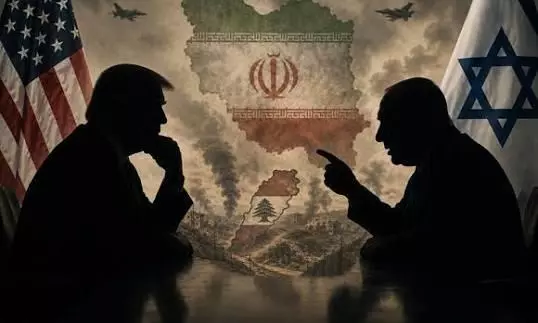

On 17 June, an MOU was signed in Islamabad between Iran and the US. Israel had opposed such a document and was not privy to the talks between the two countries. The MOU stated that peace must also extend to Lebanon. Any attack on Lebanon would constitute a breach of the MOU. If Lebanon were attacked, Iran would consider itself absolved of the MOU and entitled to retaliate against whoever assailed Lebanon.
Israel has been illegally occupying part of Lebanon since March 2026. Hours after the MOU was signed, Israel intensified its attacks in Lebanon.
Hezbollah is a Shia political party and militia in Lebanon. Iran is a close ally of Hezbollah. Israel justifies its assaults on Lebanon on the basis of Hezbollah's presence. Since March 2026, at least 4,000 people have been killed in Lebanon by Israel, and even Israel admits that most of them are civilians.
Donald J. Trump has expressed his displeasure with the continuing Israeli attacks in Lebanon. He went so far as to publicly castigate the Prime Minister of Israel.
Israeli air strikes on Lebanon caused Iran to pull out of further talks with the United States. This may have been Israel's real objective. By attacking Lebanon, Israel provokes Iran. The Iranians feel honour-bound to come to the aid of their friends in Lebanon. Iran then strikes back at Israel.
Will the United States feel compelled to assist Israel? There is a fanatical Zionist lobby in the United States, especially within the Republican Party. Some of its members say Trump was feeble to have approved the MOU with Iran. These hawks argue that the war must be fought to the finish and that Iran's enriched uranium has not been entirely destroyed; therefore, a major objective of the war has not been accomplished.
Benjamin Netanyahu convinced Donald J. Trump that a war against Iran would be easily winnable. The Iranian Government would be overthrown, bringing to power a regime in Iran that would be amenable to the United States. Netanyahu's prognostications have proven false. The war lasted longer than he predicted, and the Iranians have proven themselves far tougher than he forecast.
There is war weariness in Israel as well after close to three years of conflict in Gaza and now against Iran. Many people revile Netanyahu. There are Israelis who are cognizant that their country's enormous crimes against humanity have sickened people around the world. They recognise what a calamity Netanyahu's wars of aggression have been for Israel's international standing.
They know that public opinion in the United States is less sympathetic towards Israel than ever before. There used to be bipartisan support for Israel in the United States. The Democratic Party was almost entirely opposed to the 2026 war against Iran. Some Republicans are also opposed. Moderate Israelis are increasingly aware that Israel can rely on US assistance less and less. They therefore judge it unwise to stretch American patience.
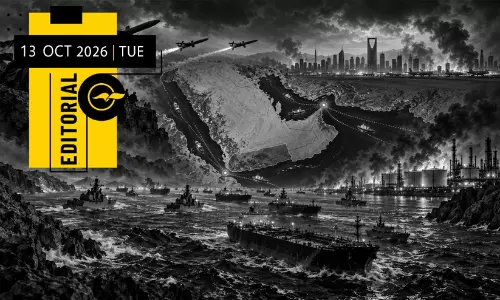
The Iranians warned the United States that continuing Israeli aggression in Lebanon would prompt a response from Iran. Iranian munitions can almost never penetrate Israel's Iron Dome. Tehran knows that the United States' Achilles heel is the Strait of Hormuz because so much of the world's oil and gas passes through it. Iran threatened to close the strait again to penalise the United States for failing to restrain Israel. On 20 June, Iran closed the strait again. It reopened 24 hours later.
Iran has demonstrated that it can control the Strait of Hormuz. In that sense, it is more powerful than ever. It merely needs to threaten to close the strait to affect the stock market and the price of oil.
The MOU is more favourable to Iran than the Joint Comprehensive Plan of Action (JCPOA), which was painstakingly negotiated between the Obama Administration and Iran over 20 months. The MOU has granted Iran certain waivers from sanctions. Iran is earning much-needed foreign exchange. It has up to USD 100 billion in frozen assets. USD 7 billion has been unfrozen and may be used only for humanitarian purposes.
The details of the inspection regime to ensure that Iran is not developing nuclear weapons have yet to be worked out. They are to be determined within 60 days of 17 June. This regime may well prove laxer than its predecessor. The Israelis are concerned about that. Trump has a very short attention span. He appears to have grown bored with Iran, and he did not secure the quick victory he expected. The United States may move on to another target, such as Cuba.
On 24 June, Israel's Defence Minister declared that Israel had no intention of withdrawing from the section of Lebanon that it is occupying. Israel has occupied a tiny section of Lebanon since 2000, when it withdrew from 20 per cent of the country that it had occupied since 1982.