












War-end terms: Hormuz opening, $300bn for Iran, sanctions lift, Lebanon ceasefire
text_fields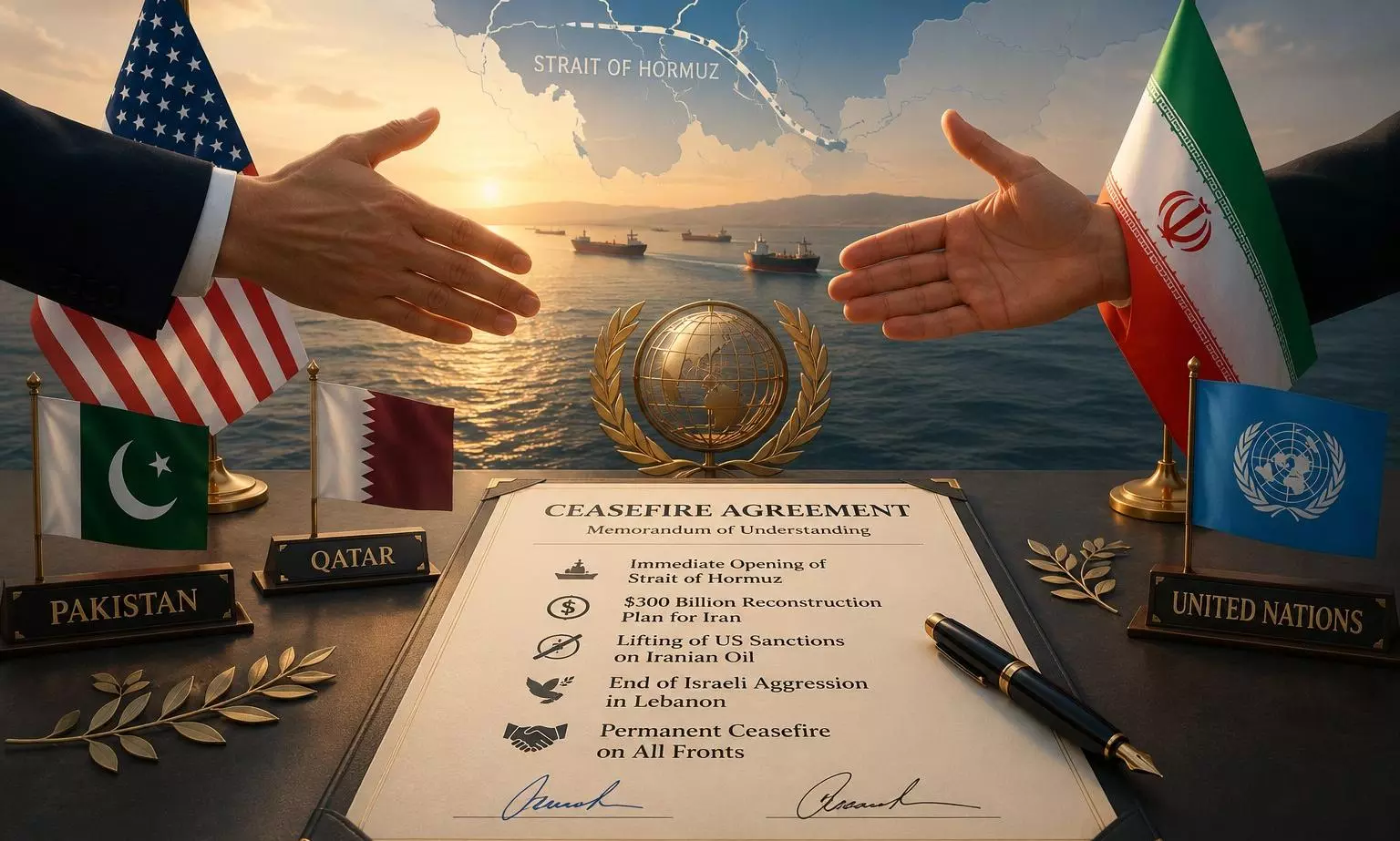

The tension in the Middle East is likely to end with reports that both Iran and the US have agreed to sign a memorandum of understanding to end the more than five-month-old war on key conditions, such as the immediate opening of the Strait of Hormuz, the US and its allies delivering reconstruction plans for Iran worth at least $300 billion, and the lifting of US sanctions on Iranian oil.
The proposed understanding, announced by US President Donald Trump and confirmed by senior Iranian officials, marks the most significant diplomatic breakthrough since the conflict erupted, although the detailed terms have not yet been officially endorsed by either side. The agreement is expected to be formally signed in Switzerland later this week following technical negotiations.
According to reports carried by Iran’s semi-official Mehr news agency, the draft memorandum consists of 14 points aimed at establishing a permanent ceasefire and laying the foundation for a broader settlement.
Among its principal provisions are the immediate cessation of hostilities on all fronts, including Lebanon, a commitment by the US not to interfere in Iran’s internal affairs, the withdrawal of US forces from Iran, and the lifting of the US naval blockade within 30 days.
The draft also envisages the reopening of the Strait of Hormuz under Iranian arrangements within the same period, restoring one of the world’s most vital maritime energy routes. In addition, the US and its allies are reportedly expected to prepare reconstruction plans for Iran valued at no less than $300 billion while ending sanctions on Iranian oil and energy exports, offering substantial economic relief to the country.
The memorandum further reiterates Iran’s commitment not to produce nuclear weapons and includes a reported assurance from the US that it will neither expand its military presence in the region nor impose fresh sanctions.
Mehr also stated that final negotiations would commence only after part of Iran’s frozen assets is released, oil sanctions are suspended and the naval blockade is lifted, while the eventual agreement would be endorsed through a United Nations Security Council resolution.
Despite these reports, neither the US nor Iran has officially confirmed the complete list of provisions, leaving many aspects of the proposed settlement subject to verification.
The diplomatic initiative follows days of uncertainty after renewed violence in Lebanon threatened to derail negotiations. Israeli military operations in Lebanon and Iran’s warnings of retaliation had raised fears that the conflict could widen further, prompting intensive mediation efforts involving Pakistan, Qatar, Saudi Arabia and Türkiye.
Pakistan has announced that the signing ceremony is scheduled for June 19 in Switzerland after technical discussions this week. The mediation has also drawn international support, with the United Nations welcoming the development as a critical step towards ending the conflict and expressing readiness to assist in achieving a durable peace.
European countries, including the United Kingdom, France, Germany and Italy, have indicated their willingness to consider lifting sanctions on Iran in response to progress on its nuclear programme.
Japan has likewise welcomed the reported agreement and expressed hope that the reopening of the Strait of Hormuz and the implementation of the proposed measures will ensure free and secure navigation while paving the way for a comprehensive settlement of the wider dispute.