












Netanyahu suffers major blow as Herzog entrusts Eisenkot with forming Israel government
text_fields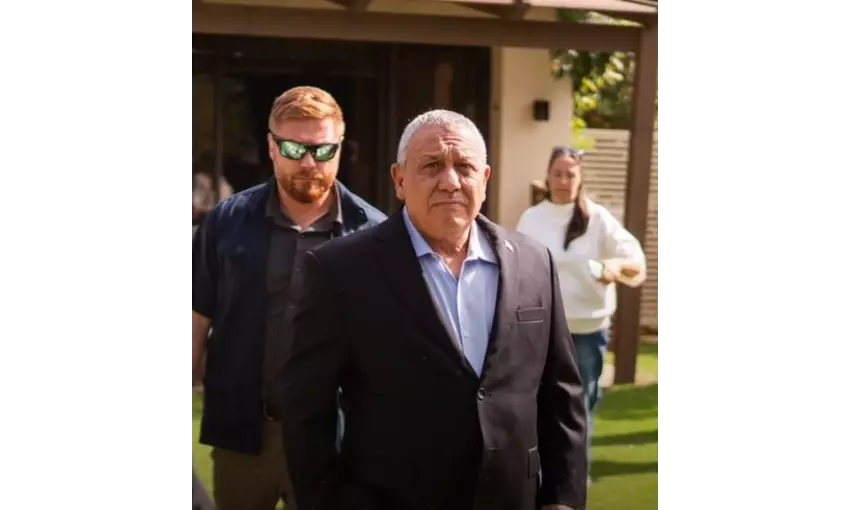

Jerusalem: Israeli President Isaac Herzog has handed opposition leader and former military chief Gadi Eisenkot the mandate to form the country’s next government, dealing a major blow to Prime Minister Benjamin Netanyahu’s bid to remain in power after the October 27 general election.
Eisenkot, who leads the Yashar party, received the backing of 67 lawmakers during consultations with parliamentary factions, while 46 legislators recommended Netanyahu. Seven members chose not to endorse either leader.
Herzog announced his decision on Saturday, November 7, after holding consultations with political leaders, including Netanyahu and Eisenkot. The formal handover of the mandate is scheduled for Sunday, November 8, at 5 pm local time, at the President’s Residence in Jerusalem.
Eisenkot now has 28 days to put together a governing coalition, with the possibility of a 14-day extension if needed. The mandate gives him the first opportunity to unseat Netanyahu, Israel’s longest-serving prime minister.
The recommendations highlight the shifting balance of power in Israel’s 120-member Knesset, where at least 61 seats are needed to form a majority government.
Eisenkot received support from 48 lawmakers in the Change Bloc, seven from the Arab party Ra’am and 12 from the Joint List. Netanyahu secured 46 recommendations from his right-wing and religious allies, while the seven members of United Torah Judaism declined to back either candidate.
However, the 67 recommendations do not ensure that Eisenkot will be able to form a stable government. Political differences among the parties backing him could complicate coalition talks.
The Arab-led factions have said they are prepared to support an alternative to Netanyahu from outside the government, rather than necessarily joining a coalition. Their potential role remains politically sensitive, as some parties aligned with Eisenkot are reluctant to rely on their support.
Eisenkot, a former chief of staff of the Israel Defense Forces, entered politics in 2022. His Yashar party won 21 seats in the October 27 election, while the broader Change Bloc secured 48 seats.
He emerged as Netanyahu’s main challenger by bringing together political groups ranging from the centre-left to the right, largely united in their opposition to the incumbent prime minister.
Eisenkot briefly served in Netanyahu’s wartime cabinet after Hamas’s October 7, 2023, attack before returning to the opposition. He has since criticised the government’s handling of the Gaza war and ruled out serving under a Netanyahu-led administration.
Despite the setback, Netanyahu has not conceded defeat and continues to push for a national unity government.
He has strongly opposed any government that depends on Arab-led parties, calling them supporters of terrorism. Eisenkot’s party has criticised those remarks and urged Likud members to reconsider their alliance with far-right partners.
Negotiations are also likely to be complicated by differences over the Gaza war, national security, military conscription and Netanyahu’s continued leadership.
Eisenkot has several possible routes to power. These include forming a minority government supported from outside by Arab lawmakers, negotiating with ultra-Orthodox parties, or trying to build a broader national unity government.
Each option carries major challenges. Disputes over military service exemptions for ultra-Orthodox men could particularly hinder talks with religious parties.
If Eisenkot is unable to form a government within 28 days, Herzog may grant him another 14 days. Should that effort also fail, another candidate could be given the mandate, potentially opening the door for Netanyahu to try again. Repeated failures to form a coalition could ultimately lead to fresh elections.
For Netanyahu, Herzog’s decision marks one of the most serious challenges yet to his long hold on political power.
(Inputs from IANS)