










Netanyahu on thin ice; a Jewish-Arab coalition in the making
text_fields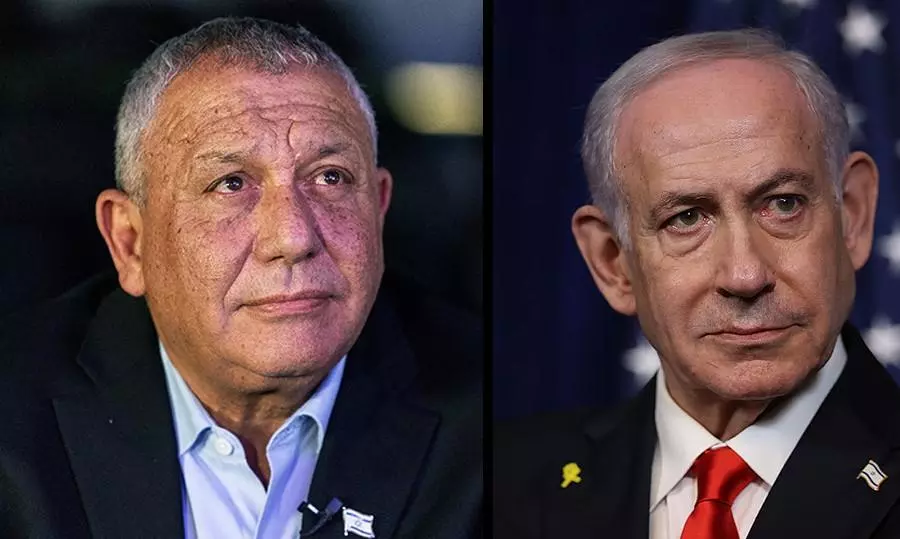
Gadi Eisenkot and Benjamin Netanyahu (file photo)

Perhaps Benjamin Netanyahu, the longest-serving Prime Minister of Israel, has survived many challenges in his political career that spans more than three decades. However, this time, the election outcome is more precarious for the right-wing politician. In the crucial parliamentary election since the October 7 Hamas attacks, no party could win an absolute majority, leading the Jewish nation once again into a political stalemate. Netanyahu’s all-out effort to retain power has been shattered, with 53 seats, eight seats short of a simple majority to form the government in the 120-member Knesset, the Israeli Parliament. The Opposition alliance could win 67 seats, comfortably crossing the 61 mark. Gadi Eisenkot, the nearest rival to Netanyahu, who looks poised to form the government, got 48 seats, and the Arab parties won 19 seats, now acting as the kingmaker.
Indeed, Eisenkot could form the government with the help of Arab parties, a prospect still in the pipeline, and he has started mobilising a post-election alliance. If it fails, the country will head to another election, and that may help Netanyahu to secure more seats, or a war may start with Iran, and that, of course will provide Bibi an opportunity to remain in the seat until the war finishes.
The opposition alliance, containing four parties, is divided in partnership with Arab parties, though they are united in ousting Netanyahu. This has led Eisenkot to form a coalition of Zionists and non-Zionists, or a Jewish-Arab coalition. Eisenkot has put forward some conditions to recognize Israel as a Jewish state and Hamas a terrorist organisation. But as of now, Arab parties are unwilling to recognise the conditions as a prerequisite for joining the government. Instead, Arab parties have laid out their own conditions.
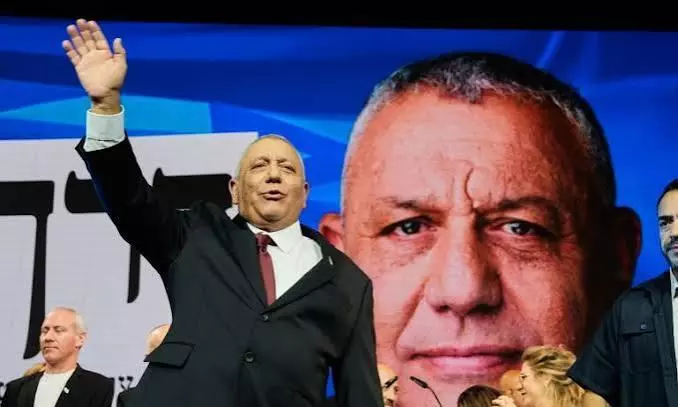
Netanyahu, on his part, has been campaigning against a Jewish-Arab alliance. He threatens that such an alliance would destabilise Zionism, a sensitive card to trigger nationalistic and religious sentiments. Eisenkot and other opposition parties are hell-bent on unseating Netanyahu, but unwilling to play with the nationalist fervour. This is the deadlock where Israel stands now.
Meanwhile, Netanyahu and his right-wing camp have already started the campaign that the election was 'stolen'. He hints that foreign intervention has hijacked the Israeli election, a charge he failed to substantiate. Though he skipped naming the country, his accusative finger is clearly pointed at Qatar, which it firmly denied.
The biggest takeaways of this election are the rise of Arab parties, a formidable force in the Jewish state, and the disappointing performance of far-right religious parties led by Ben Gvir and Smotrich. Though their parties were not wiped out, their voices weakened. They have lost a significant say in the government.
What exactly made the Arab parties rise to the limelight is indeed a matter to be discussed. Arab citizens or the Palestinians who have been living there for decades constitute 21% of Israel's population. Though they have been given citizenship and rights to vote since the formation of Israel in 1948, most of the time they boycotted the election as they thought that would legitimise what Israel has been doing against the Palestine minorities.
The discrimination and the marginalisation they face is unparalleled and the crime and violence against the Arab communities are often neglected by the right-wing nationalist government of Netanyahu.
This time the Joint List, a coalition of three Arab parties, and Ra'am led by Mansoor Abbas mobilised the people to vote against the oppression and racial segregation. This drove the Arab communities in large numbers to use their franchise, and the huge turnout has made the picture entirely different. The Arabs won 19 seats and are now in a position to play a pivotal role in the formation of the government.
Though the opposition bloc is yet to accept the Arab partners, their performance in the election is a significant political turning point. At least the Arab minorities have become an unignorable political force that deserves a place in any government. Though the Arab parties are divided on supporting the government, some argue not to join the government, remembering the bitter experience of 2021, and some advocate joining the government with conditions. Abbas joined the Naftali Bennet government in 2021, but it didn't last more than a year. Regardless of the different opinions, a Jewish-Arab coalition government is the only alternative other than re-election.