










Netanyahu invokes ‘Islamisation’ fears as Arab parties hold balance of power
text_fields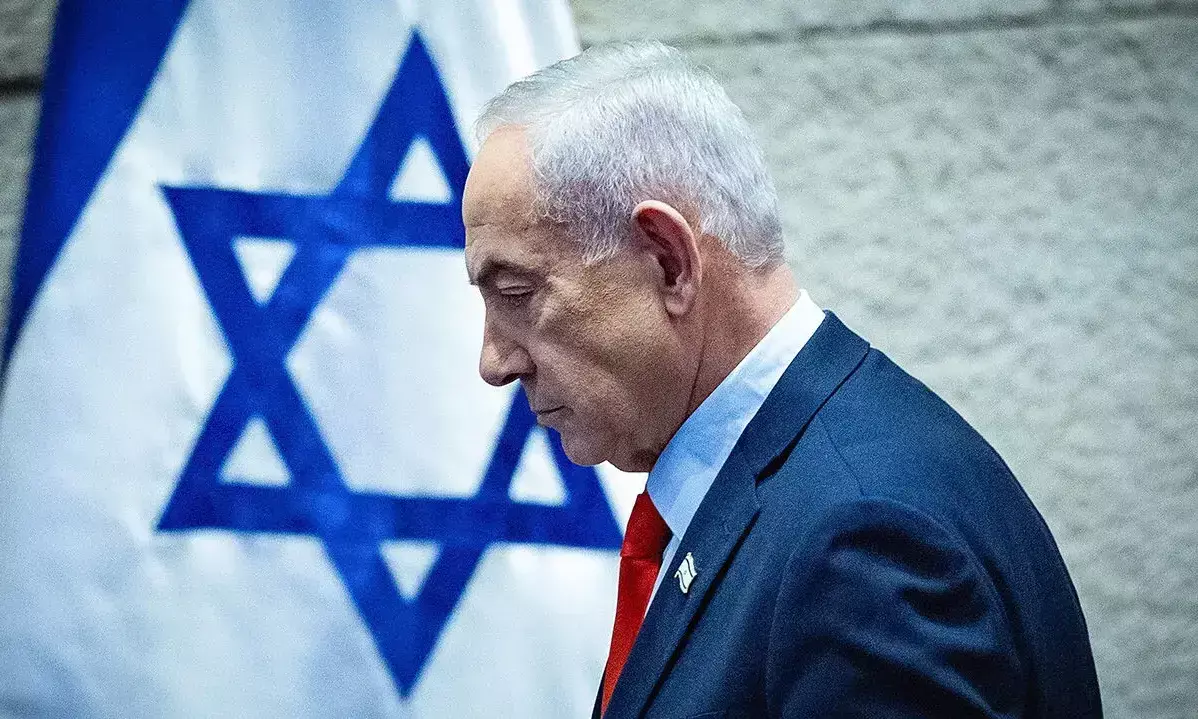

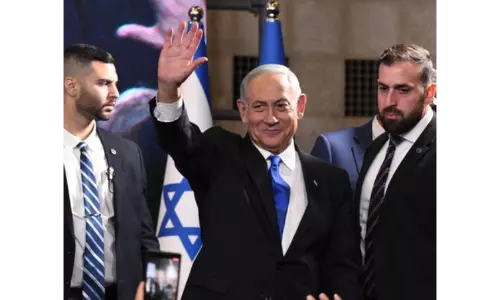
With neither major political bloc securing a clear majority, Benjamin Netanyahu accused Arab Israeli parties of vote-rigging after their historic electoral gains, in what opposition leaders described as an attempt to discredit the results and prevent them from forming a government with Arab parties’ support, accusing the prime minister of resorting to smear tactics to cling to power.
The election, held on Tuesday, produced no clear majority for either of the two main political blocs, leaving Arab Israeli parties with unprecedented influence over the formation of the next government.
The Joint List and Ra’am, representing Palestinian citizens of Israel, secured a combined 19 seats in the 120-member Knesset, marking a historic electoral achievement for a community that accounts for approximately one-fifth of the country’s population.
The pro-Netanyahu bloc won 53 seats, while the opposition coalition led by Gadi Eisenkot secured 48, leaving the Arab parties holding the balance of power. The outcome ended the parliamentary majority enjoyed by Netanyahu’s far-right coalition during its four years in office, although neither principal bloc managed to secure an outright majority.
Responding to the result, Netanyahu and his Likud allies called on the Shin Bet, Israel’s internal security service, to investigate alleged vote-buying and electoral irregularities in Palestinian communities, claiming that foreign money had been used to influence the outcome.
In a statement subsequently shared by Netanyahu on X, Likud described the alleged violations as an attempt to bring about a foreign takeover of the Knesset, the Islamisation of Israel and the overthrow of right-wing rule.
The allegations prompted an immediate backlash from opposition leaders, who accused the prime minister of attempting to delegitimise an election whose outcome had weakened his political position.
Eisenkot described the accusations as part of a coordinated campaign by Netanyahu and Likud to discredit the results, insisting that any investigation must proceed without being used to delay the convening of the newly elected parliament.
Netanyahu’s claims were also challenged by government officials and election authorities. Dean Livneh, acting director general of the Central Elections Committee, said there appeared to be no basis for the allegations, while police officials reportedly described the voting process as relatively trouble-free. President Isaac Herzog, meanwhile, urged political leaders not to tarnish an entire community that had exercised its democratic right to vote.
Although Likud did not initially identify the alleged foreign power, Israeli media reports pointed to Qatar, whose government categorically denied involvement in the election. The controversy acquired an additional political dimension when former prime minister Naftali Bennett accused Netanyahu of hypocrisy, pointing out that advisers to the Israeli leader had themselves faced allegations of receiving Qatari money to promote the Gulf state's image.
The strong Arab turnout appeared to reflect growing frustration over discrimination and apprehension about another term for far-right ministers such as National Security Minister Itamar Ben-Gvir and Finance Minister Bezalel Smotrich, both known for their hardline positions towards Palestinians.
Netanyahu’s accusations have consequently brought the question of Arab political representation to the centre of Israel’s post-election negotiations. Although the Joint List and the Zionist Change bloc have ruled out a formal coalition, discussions have reportedly taken place over tactical cooperation in parliament to replace Knesset Speaker Amir Ohana and advance legislation, including an independent inquiry into the security failures preceding Hamas’s October 7, 2023, attack.
Ahmad Tibi, a Joint List leader, said Netanyahu was attempting to prevent the opposition from establishing a common front with Arab parties, while accusing him of trying to intimidate Eisenkot against forming a government dependent on their parliamentary support.