


















Indian scientists develop ‘smart’ drug that targets cancer cells
text_fields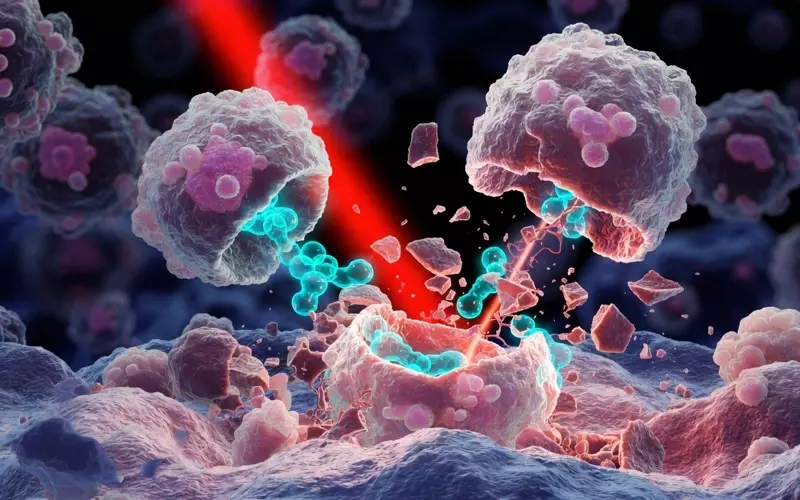

New Delhi: Indian scientists have developed a new “smart” cancer drug candidate designed to become active primarily inside cancer cells, potentially enabling more targeted treatment while reducing the risk of damage to healthy cells.
The research was led by Dr Asis Bala of the Institute of Advanced Study in Science and Technology (IASST), an autonomous institute under the Department of Science and Technology, in collaboration with Dr K.P. Bhabak of the Indian Institute of Technology Guwahati.
The drug candidate, named RK-251, is designed to remain relatively inactive in normal tissues and become activated inside cancer cells, according to reports.
Conventional cancer treatments can affect healthy cells along with tumour cells, often causing significant side effects. The new approach seeks to address this limitation by exploiting a biological difference between cancerous and healthy cells as a trigger for drug activation.
Cancer cells typically produce higher levels of reactive oxygen species (ROS), molecules that can cause cellular damage but can also be used for targeted drug delivery. When RK-251 enters a cancer cell, elevated ROS levels are designed to activate the compound, releasing NBDHEX, a potent anticancer agent.
NBDHEX targets proteins that play an important role in the survival and treatment resistance of several cancer cells. By releasing the compound primarily within the cancer-cell environment, RK-251 could potentially deliver its anticancer action more selectively while limiting exposure to healthy tissues.

In preclinical experiments, RK-251 showed strong activity against aggressive triple-negative breast cancer cells, while having considerably less effect on healthy cells. The findings suggest that the ROS-responsive mechanism could help improve the selectivity of cancer treatment.
The researchers also tested the drug candidate using zebrafish embryos (Danio rerio). The experiments showed no obvious signs of toxicity, while the compound displayed the expected fluorescence in the presence of reactive oxygen species. This provided additional evidence supporting the proposed mechanism of action and the need for further investigation.
However, RK-251 remains at the preclinical research stage and is not yet available as a treatment for patients. Further laboratory studies, safety assessments and validation through appropriate clinical trials will be required before the drug candidate can be evaluated for use in humans.
With IANS inputs