









University of Hyderabad professor accused of casteist abuse; alumnus seeks action
text_fields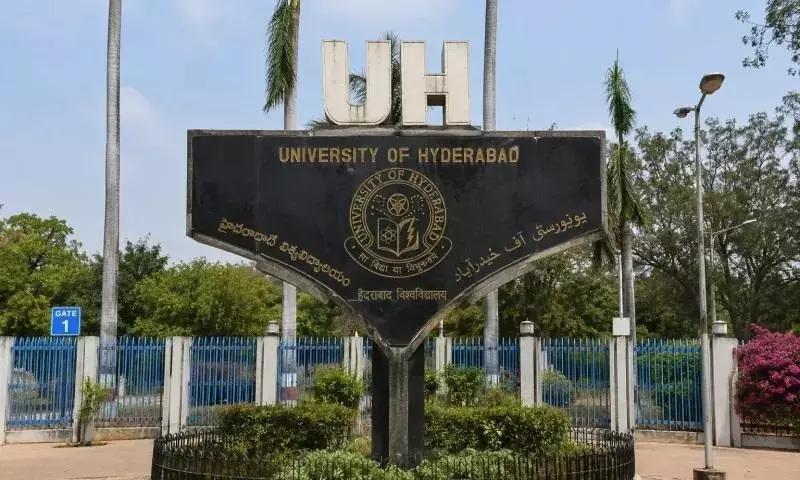

Hyderabad: A former student of the University of Hyderabad has filed a formal complaint against Dr Vijay Ramdas Mandala, an Associate Professor in the Department of History, alleging that the faculty member used casteist, classist and communal language against him and other former students in an email.
The complainant, Subodh Kumar, completed his MA in History at the university between 2017 and 2019 and is now pursuing a PhD at the University of Nottingham. In a complaint sent on October 31 to the Vice-Chancellor, the university’s Redressal Cell and the students’ union, he has demanded disciplinary and institutional action against the professor.
According to Kumar, he and several other alumni had been working with Dr Mandala earlier this year on an edited book project. The dispute began after one contributor shared British university guidelines relating to fieldwork in India. Kumar alleges that the professor responded with abusive remarks targeting students from marginalised, Dalit and economically disadvantaged backgrounds.
In the alleged email, dated April 16, Dr Mandala is said to have referred to a Dalit PhD student in derogatory terms and made disparaging comments about people from Bihar and Jharkhand, describing them as backward and poverty-stricken. He also allegedly made offensive remarks about ethnic minorities in the United Kingdom and claimed that Europeans were inferior to “Indo-Aryans” in India.
The professor reportedly refused to accept the contributor’s chapter and said he would no longer provide academic support to students from Bihar and Jharkhand, whom he described in insulting terms. He also allegedly warned that he would ask faculty members at Indian institutions not to engage with the student.
In a separate email to Kumar on April 27, Dr Mandala reportedly said he would not accept his chapter as the book project already had enough contributors. He also asked Kumar not to include his name in future academic references or communications. The email reportedly carried a disclaimer saying the views expressed were personal and did not represent the university or any student community.
Kumar first approached the Head of the Department of History. He said he received an apology and an assurance that the professor would not interfere with his fellowship or recommendation letter. In a communication dated May 10, the department head reportedly said the matter would be resolved and that the department would support his research and career.
Kumar rejected the proposed resolution. In his reply on May 13, he argued that an apology and assurance of non-interference were insufficient in a case involving alleged racism, classism and caste-based discrimination. He also said another junior colleague had independently complained about related conduct.
Referring to the death of Rohith Vemula, a Dalit research scholar at the university whose death in 2016 had drawn national attention to caste discrimination in higher education, Kumar said such allegations could not be settled informally. He demanded action within a week and said his later follow-ups to the department head received no response.
In his latest complaint, Kumar alleged that the professor had used the guise of supporting marginalised students to build academic influence, while harbouring casteist attitudes. He said that if the university failed to act, he would approach the University Grants Commission, the Union Ministry of Education, the National Commission for Scheduled Castes and other statutory bodies.
Student organisations have also demanded accountability. The Fraternity Movement’s University of Hyderabad unit called for a fair and effective redressal mechanism and sought a proper inquiry into the alleged casteist remarks. It said the university must ensure a safe environment for Dalit-Bahujan students.
The Students’ Federation of India–United Kingdom also condemned the alleged abuse, calling it casteist, classist and communal. The organisation urged academic communities in India and the UK to hold the professor accountable and reiterated its commitment to social justice, equality and dignity.