











TISS overhauls student elections, faces representation backlash
text_fields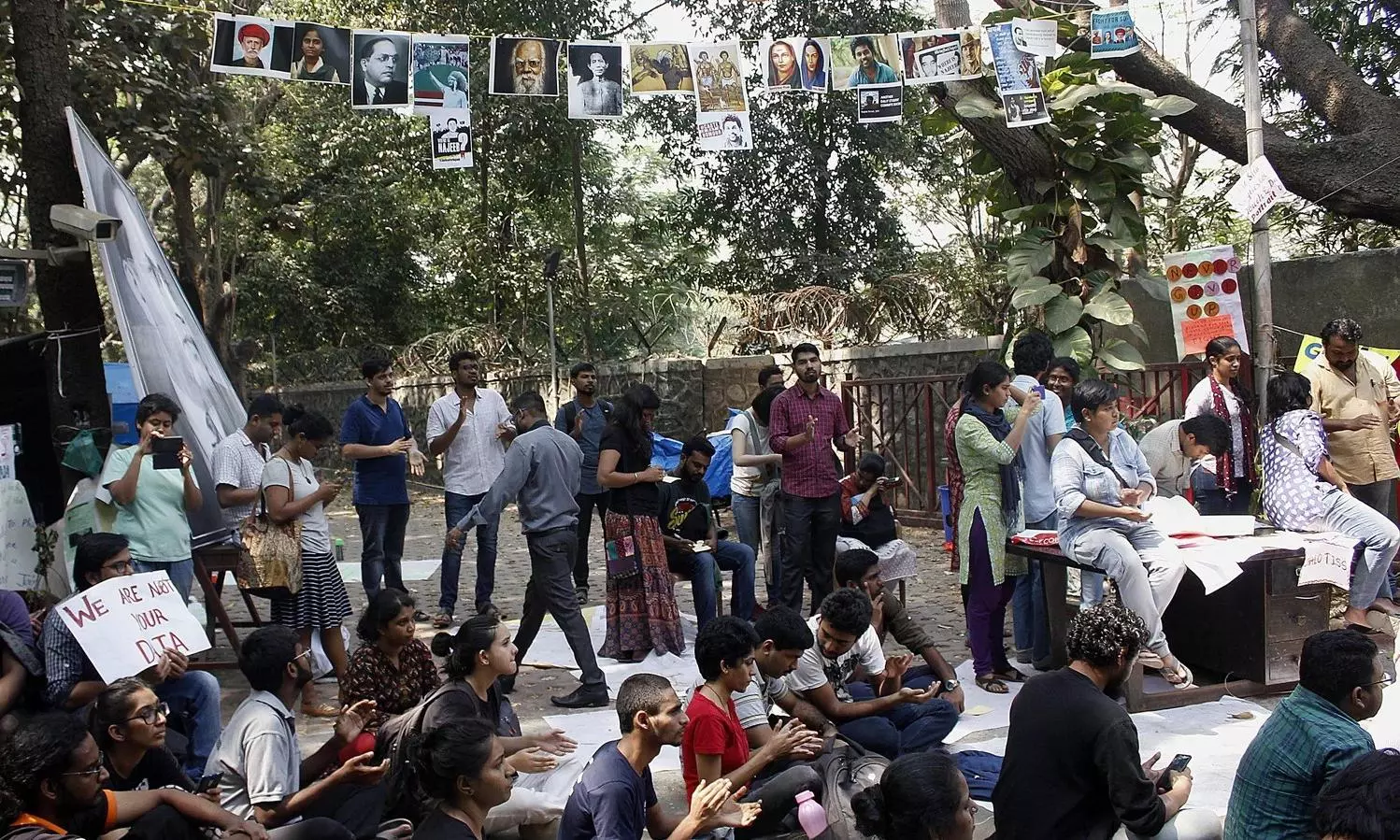

Mumbai: The Tata Institute of Social Sciences (TISS) is holding student body elections on February 6 under a completely revised framework that has ignited tensions between the administration and student groups. After a year-long suspension of campus polls, the institute has replaced the traditional ‘Students’ Union’ with a ‘Students’ Council,’ removed student representation from key decision-making bodies, and introduced a mandatory non-political affiliation undertaking for candidates.
The most significant change involves scrapping the seven-member executive body that previously included a President, Vice-President, and General Secretary. Instead, the new Students’ Council will comprise one representative elected from each class across all programs. Students argue this decentralization dilutes their collective bargaining power. They also highlight the abolition of student seats on the Academic Council, the highest academic decision-making body, the Disciplinary Committee, and the General Complaints Committee. Previously, the President and General Secretary represented students on these bodies, but the new constitution excludes such representation.
The election process itself has been decentralized, with the Office of Student Affairs (OSA) holding substantial authority post-election. The OSA will nominate elected class representatives to specific committees like finance, culture, and sports, and can even appoint non-elected students if representation is deemed inadequate. Student groups contend this transfers decision-making power from elected representatives to the administration.
Adding to the controversy is a new mandatory undertaking requiring candidates to declare they are not affiliated with any political party or organization. Previously, candidates only needed to affirm they had no criminal record or academic arrears. Students have called this requirement absurd, noting that false declarations could lead to immediate disqualification.
Procedural concerns have also emerged. Although the administration invited suggestions on the "draft" constitution until 5 pm Friday, the nomination window for the elections had already closed on Thursday. Students argue that if the constitution remains a draft, the elections should not proceed under the new framework.
Prof. M. Mariappan, Dean of Student Affairs, defended the overhaul as a move toward "decentralization of power" and broader participation. He explained that the Council model allows more students to engage in extra-curricular activities and develop leadership skills through specialized committees. On the non-political undertaking, Mariappan described it as a precautionary measure to ensure candidates adopt a solution-oriented approach focused on student welfare rather than political behavior. He assured that no candidate would be disqualified solely based on the undertaking and that student representation on statutory bodies would continue as required.