















Lok Sabha passes Mining Bill without debate amid Oppn protests
text_fields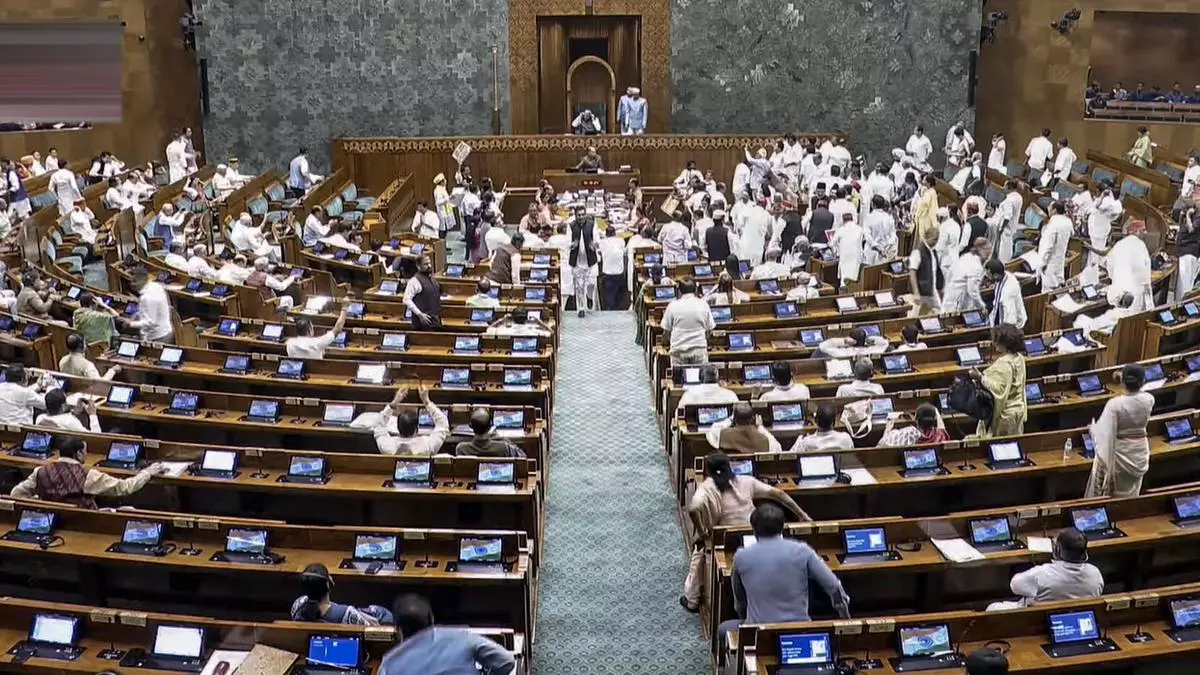

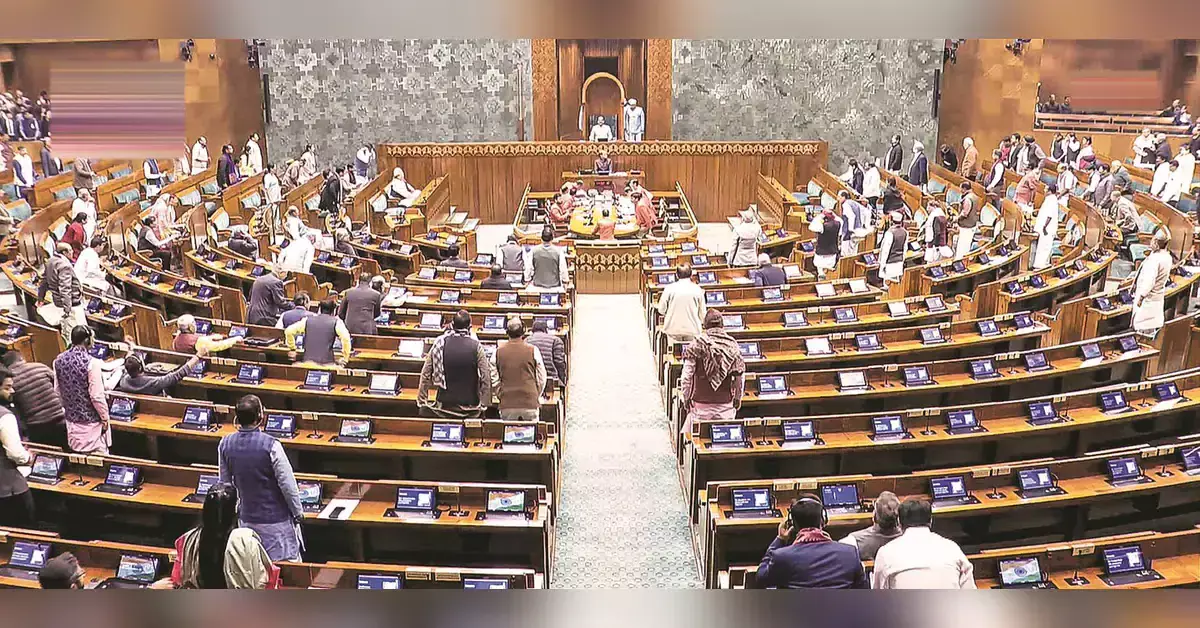
New Delhi: The Lok Sabha on Wednesday passed the Mines and Minerals (Development and Regulation) Amendment Bill, 2026, without a debate amid protests by Opposition members over various issues.
The Bill seeks to amend the regulatory framework governing mines and minerals and bars state governments from imposing additional taxes, cess or other levies on mineral rights.
It also proposes to bring the regulation of mineral-bearing lands under the control of the Centre based on parameters prescribed under the Mines and Minerals (Development and Regulation) Act.
According to the Bill’s Statement of Objects and Reasons, the proposed provision would supplement the existing legal framework that provides for Union control over the regulation of mines and the development of minerals.
Union Minister for Coal and Mines G Kishan Reddy introduced the legislation amid Opposition protests.
Under the proposed amendments, state governments would not be permitted to impose any tax, cess or other levy on mineral rights. The restriction would also cover mineral-bearing lands, with the applicability determined on the basis of factors such as mineral quantity, mineral value or royalty, subject to conditions or restrictions prescribed by the Centre.
The Bill proposes inserting a new section into the MMDR Act to give effect to these provisions.
It further states that any tax, cess or other levy on mineral rights or mineral-bearing lands that had not been deposited with or recovered by a state government before the commencement of the MMDR (Amendment) Act, 2026, would be treated as invalid at all relevant times.
However, amounts already deposited with or recovered by state governments before the new law comes into force would not be refunded.
Reddy said the amendments were aimed at ensuring greater certainty, stability and predictability in the fiscal regime for the mineral sector. According to him, this would encourage investment and support economic growth, contributing to the objectives of Atmanirbhar Bharat and the vision of a Viksit Bharat by 2047.
The minister argued that differences in fiscal impositions on minerals across regions could affect public interest. He said excessive or uneven taxes and levies could encourage industries to bypass local supply chains, resulting in inefficient market development, higher transportation costs and increased pollution.
He also warned that higher domestic mineral costs could lead to greater imports even when adequate mineral resources are available within the country.
Reddy said the absence of reasonable limits on taxes imposed by states on mineral rights and mineral-bearing lands had created several problems.
He further argued that a heavy tax burden at the extraction stage or elsewhere could raise the cost of goods and services and ultimately increase the cost of living. He said retrospective taxation could also create legal uncertainty and undermine investor confidence.
RSP leader NK Premachandran opposed the introduction of the Bill, arguing that the proposed legislation was contrary to the principles of federalism.